Cryptomonads
Cryptophyceae
Cryptomonads are a group of unicellular, asymmetrical algae characterized by two unequal flagella and a deep gullet or furrow (vestibulum). They typically possess chloroplasts derived from secondary endosymbiosis with red algae, containing pigments such as phycobiliproteins. These organisms occur in both freshwater and marine environments and play a key role as primary producers within the microbial food web. Many species are mixotrophic, meaning they can ingest organic particles or bacteria in addition to performing photosynthesis.
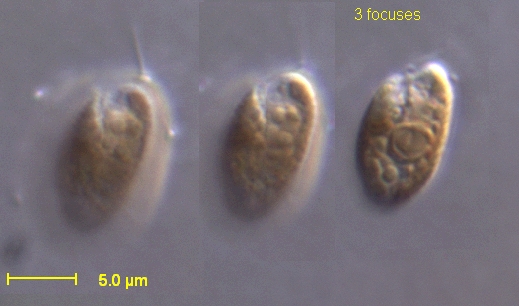
Details
Oxygen production
Significant oxygen release as a byproduct of photosynthesis in the euphotic zone.
Habitat function
Form the basis of pelagic food chains in standing and flowing water bodies.
Nutrient uptake
Uptake of dissolved nitrogen and phosphate; mixotrophic species additionally utilize organic carbon sources.
Food source for
Zooplankton (e.g., Daphnia), rotifers, and small planktivorous fish.
Human use
Used in aquaculture as high-quality initial feed for fish larvae and invertebrates.
Ecology
Ecological role
Important primary producers and high-quality food source for zooplankton due to their high content of essential fatty acids.
Natural predators
Filter-feeding zooplankton such as daphnids, rotifers, and various ciliates.
Competitor species
Other phytoplankton groups such as diatoms or green algae.
Ecosystem service
Oxygen production through photosynthesis and provision of biomass for higher trophic levels.
Threats
Water pollution, extreme herbicide levels, and drastic changes in salinity in estuaries.
Scientific profile
Profile
Distinguishing features
Presence of ejectosomes (explosive organelles), a complex periplast made of protein plates, and the presence of a nucleomorph (reduced nucleus of a eukaryotic endosymbiont).
Reproduction
Mainly asexual via longitudinal binary fission; sexual reproduction (isogamy) has been documented in some genera.
Protection & threats
Main threats
Excessive eutrophication (shift towards cyanobacteria), chemical stress from herbicides, and extreme temperature changes.
Conservation measures
Maintenance of water quality through nutrient management; protection of natural stratification and mixing processes in lakes.