Edible Frog
Pelophylax kl. esculentus
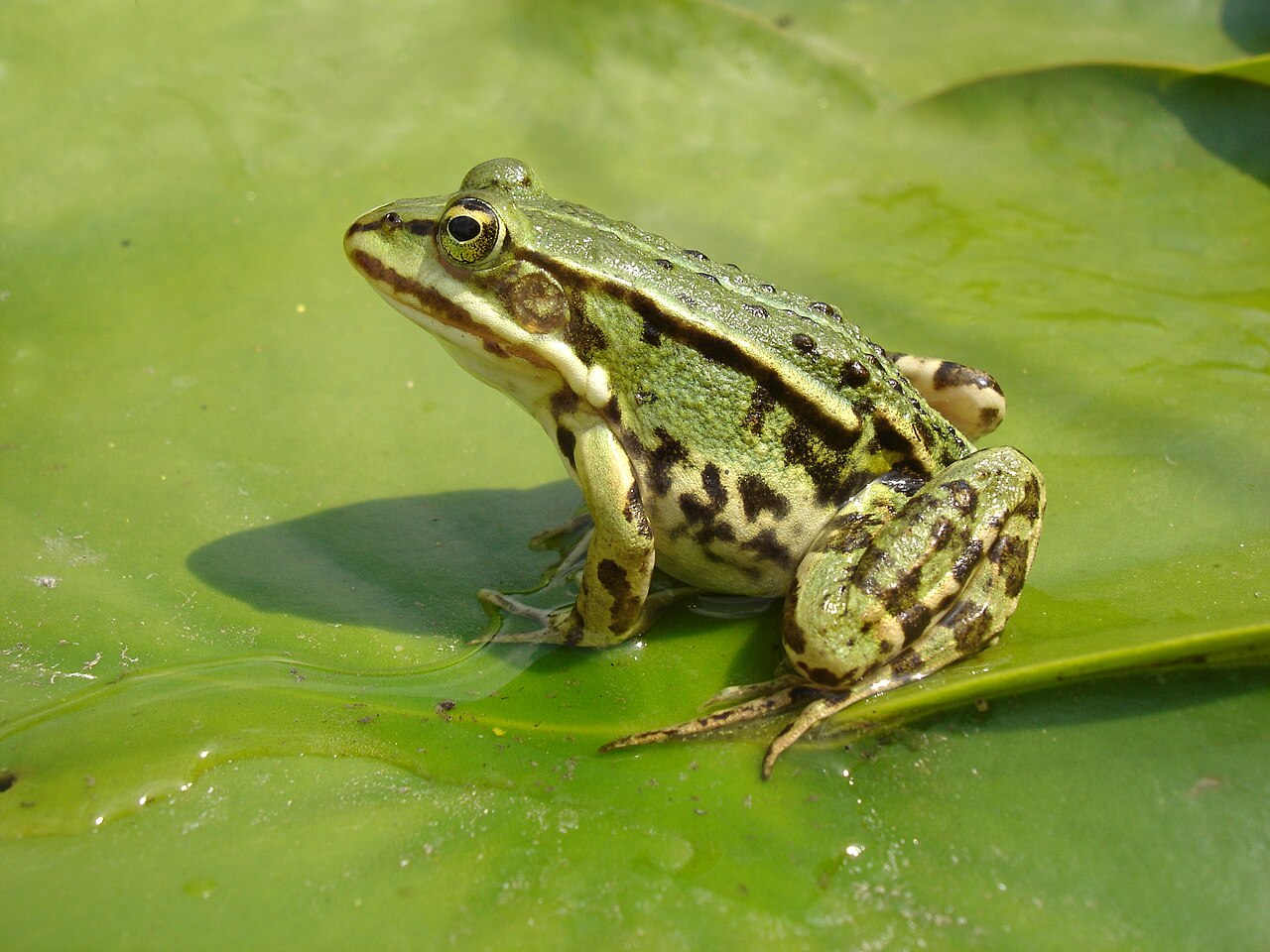
The edible frog is a hybridogenetic taxon resulting from the cross between the marsh frog (Pelophylax ridibundus) and the pool frog (Pelophylax lessonae). It is characterized by its predominantly bright green coloration with black spots and a light vertebral stripe. This amphibian species is closely tied to permanent stagnant water bodies where it spends most of the year. A distinctive feature is the loud mating call of the males, produced using two external whitish vocal sacs.
Details
Identification
Green to brown base color, usually a yellow-green dorsal stripe, dark spots, metatarsal tubercle size is intermediate between parent species.
Social behavior
Often found in groups at sunny shorelines; males form choruses during the breeding season and defend small territories.
Diet
Insects such as flies, beetles, and dragonflies, as well as spiders, worms, and occasionally smaller conspecifics or other amphibian larvae.
Hunting strategy
Ambush predator that hunts by sight and captures prey with a sticky tongue or by direct snapping.
Spawning substrate
Submerged aquatic plants to which the gelatinous spawn clumps are attached.
Overwintering
Overwinters frost-free either in the bottom mud of water bodies or in burrows on land.
Ecology
Ecological role
Important link in the food web as a consumer of insects and a prey animal for higher vertebrates.
Natural predators
Grey heron, grass snake, northern pike, mallard, various predatory mammals like the European otter.
Competitor species
Marsh frog, pool frog, other aquatic insectivores.
Ecosystem service
Biological control of insect populations, especially mosquitoes.
Threats
Loss of small water bodies, intensive agriculture, use of pesticides, fish stocking in breeding ponds.
Scientific profile
Profile
Distinguishing features
Hybridogenetic taxon (P. kl. esculentus); metatarsal tubercle of medium size and asymmetrical curvature (intermediate between P. lessonae and P. ridibundus). Males possess paired, whitish to light grey vocal sacs at the corners of the mouth.
Role in food web
Important link; regulates insect populations and serves as a significant food source for higher predators.
Protection & threats
Main threats
Loss and fragmentation of small water bodies, intensive agriculture (pesticides, nutrient input), desiccation due to climate change, and fish stocking in breeding waters.
Population trend
Currently largely stable, but locally declining in areas with intensive land use.
Conservation measures
Maintenance and creation of sunny standing water bodies, creation of buffer zones to agriculture, biotope networking, and avoidance of fish stocking.