Perfoliate Pondweed
Potamogeton perfoliatus
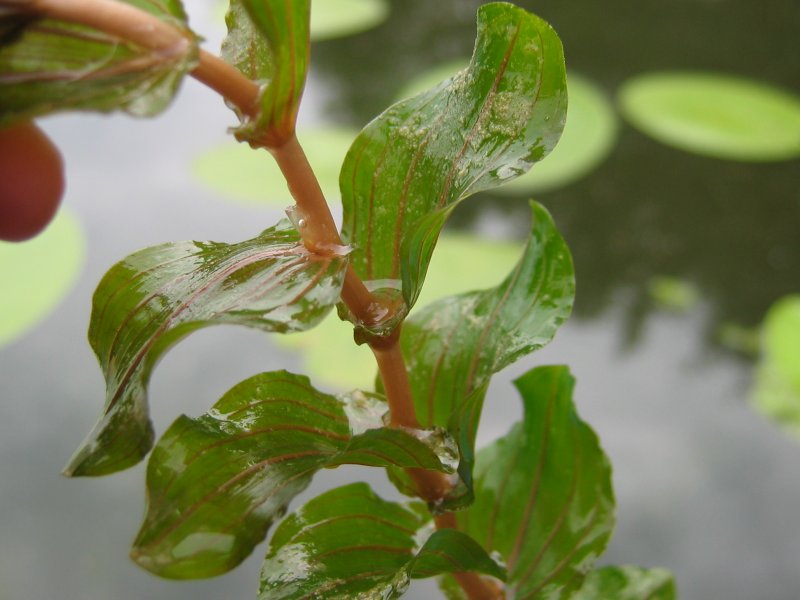
Perfoliate pondweed is a perennial, submerged aquatic plant commonly found in lakes and slow-moving rivers. It is characterized by translucent, heart-shaped leaves that clasp the stem completely, giving it its name. The plant develops long, branched stems that can reach several meters in length depending on water depth. During summer, it produces inconspicuous brownish flower spikes that emerge above the water surface.
Details
Oxygen production
High, contributes significantly to the oxygen saturation of the water body.
Habitat function
Provides shelter, structure, and food for various aquatic organisms (refugium).
Nutrient uptake
Effective uptake of phosphates and nitrates from the water and the sediment.
Food source for
Food source for waterfowl, phytophagous fish (e.g., rudd), and various invertebrates.
Human use
Used in biological water restoration and occasionally as an aquarium plant.
Ecology
Ecological role
Important primary producer, providing habitat for juvenile fish and invertebrates while stabilizing the sediment.
Natural predators
Waterfowl (e.g., swans, ducks), herbivorous fish, and aquatic snails.
Competitor species
Other pondweed species or invasive neophytes like Nuttall's waterweed (Elodea nuttallii).
Ecosystem service
Oxygen production, nutrient uptake, and erosion control of the lake bed.
Threats
Severe eutrophication, mechanical disturbance from boat traffic, shoreline development, and water turbidity.
Scientific profile
Profile
Reproduction
Generative reproduction via seeds and effective vegetative dispersal through rhizome growth, turions (winter buds), and shoot fragmentation.
Protection & threats
Main threats
Hypertrophication (algal mats and light limitation), mechanical destruction by intensive boat traffic (anchoring, wake), and herbicide runoff from agriculture.