Zander
Sander lucioperca
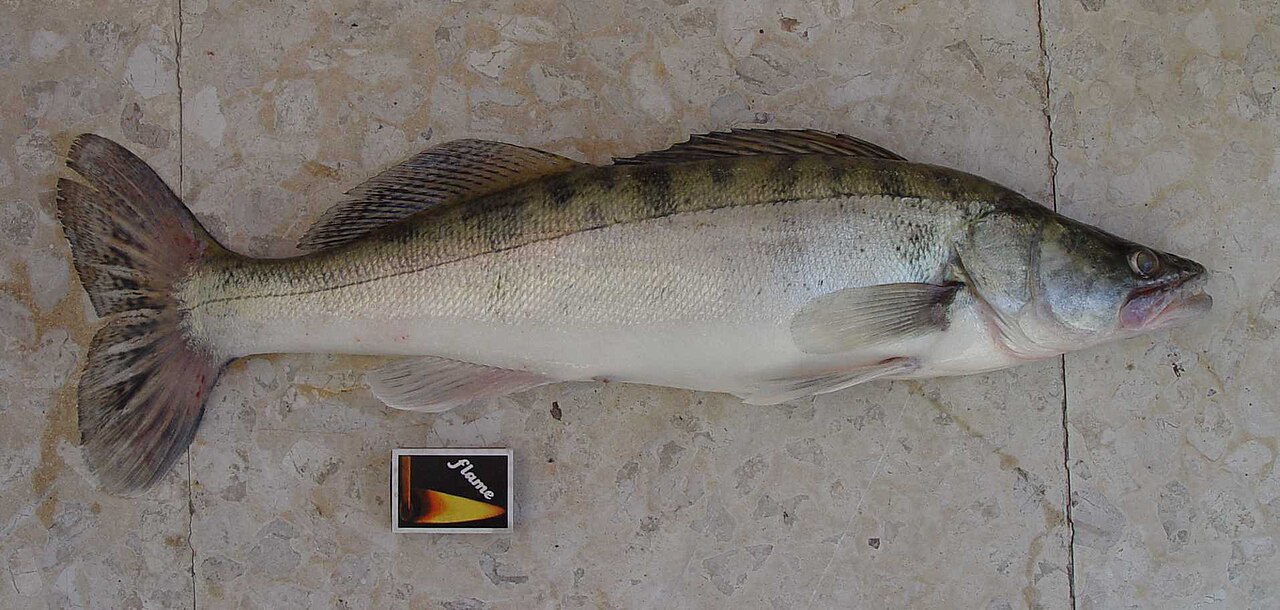
The zander is the largest freshwater member of the Percidae family in Europe and a significant predatory fish. It features an elongated, spindle-shaped body and two distinct dorsal fins, the first of which is equipped with sharp spines. Its eyes contain a reflective layer called tapetum lucidum, providing excellent vision in murky waters and low-light conditions. The coloration is typically grey-green with dark transverse bands on the flanks, and it is highly valued both ecologically and economically.
Details
Identification
Two dorsal fins (first spiny), sharp canine teeth, glassy reflective eyes, lateral line extends onto the caudal fin.
Social behavior
Juveniles often live in schools, while adults tend to be solitary or act in small groups as open-water hunters.
Diet
Mainly piscivorous; feeds on small, slender fish species such as roach, bleak, perch, and smelt.
Hunting strategy
Ambush and pursuit predator that often strikes its prey during twilight in open water or near the bottom.
Spawning substrate
Gravelly or sandy substrates, often on plant roots (e.g., willow roots) at depths of 1 to 3 meters.
Overwintering
Retreats to deeper, low-current water areas with significantly reduced metabolic rates.
Ecology
Ecological role
Apex predator; regulates populations of forage fish and contributes to the ecological balance in lakes and rivers.
Natural predators
Northern pike, larger conspecifics, cormorants, Eurasian otter.
Competitor species
Northern pike, European perch, Wels catfish.
Ecosystem service
Control of prey fish populations; high value for commercial fisheries and recreational angling tourism.
Threats
Loss of spawning habitats due to shore engineering, overfishing, and migration barriers in rivers.
Scientific profile
Morphology & ID
Coloration
Back greenish-grey to brownish, silvery flanks with 8-12 dark vertical bars, whitish belly; fins often dark spotted.
Distinguishing features
Two separate dorsal fins; large canine teeth ('dog teeth') in jaws; reflective eyes due to tapetum lucidum; small ctenoid scales; operculum with a flat spine.
Confusion species
Volga pikeperch (Sander volgensis - lacks canine teeth), European perch (Perca fluviatilis - dorsal fins connected, bolder stripes).
Sexual dimorphism
Males (milters) often darker during spawning season; males guard and fan the eggs.
Habitat
Fish region
Bream zone, ruffe-flounder zone, coastal waters (lagoons/estuaries).
Preferred zone
Pelagic and benthic zones of large, turbid lakes and slow-moving rivers; prefers turbid waters.
Flow preference
Limnophilous to eurytopic; prefers stagnant or slow-moving waters.
Substrate preference
Hard substrate (sand, gravel, stones); avoids soft mud due to nesting habits.
Oxygen requirement
Moderate to high; more sensitive to oxygen depletion than carp (critical below 4-5 mg/L).
Migration
Migration behaviour
Short migrations from lakes into tributaries or from deeper areas to shallower shorelines for spawning.