Common Bithynia
Bithynia tentaculata
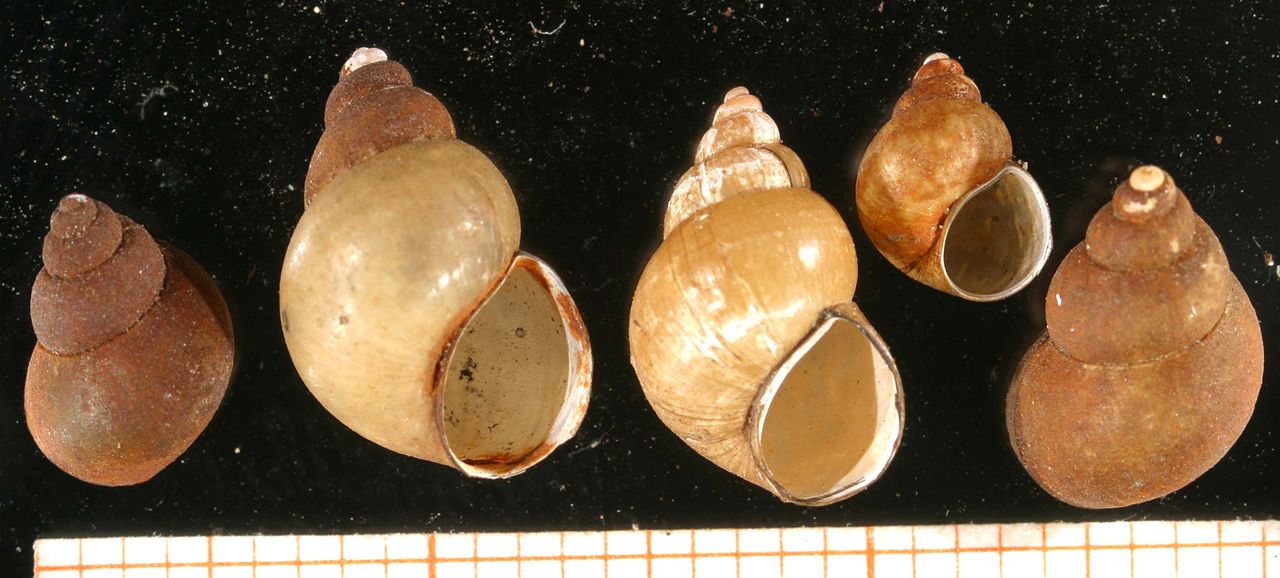
The Common Bithynia is a widespread freshwater snail belonging to the family Bithyniidae. It is characterized by a conical shell and a calcareous operculum with concentric rings. The species prefers stagnant or slow-moving waters with abundant aquatic vegetation. A unique feature is its dual feeding strategy: it can both graze on algae from surfaces and filter plankton from the water column.
Details
Identification
Conical shell with 5-6 whorls, operculum with concentric rings (not spiral), snout-like rostrum, long and slender tentacles.
Social behavior
Solitary, but often forms very dense populations when food is abundant.
Diet
Omnivorous generalist; grazes on periphyton and detritus, but also uses gill filtration to consume phytoplankton.
Spawning substrate
Solid substrate such as stones, woody debris, or the underside of aquatic plant leaves.
Overwintering
Overwintering in the sediment or on dead plant matter at the bottom of the water body.
Ecology
Ecological role
Important primary consumer and link in the food chain; serves as an intermediate host for various trematodes (flukes).
Natural predators
Fish (e.g., tench, carp), waterfowl (ducks), predatory insect larvae, and leeches.
Competitor species
Other small freshwater snails such as the pointed mud snail or ramshorn snails.
Ecosystem service
Contributes to water clarification through filtration and the control of algal growth.
Threats
Habitat loss due to shore reinforcement, excessive eutrophication, and pesticide input into water bodies.
Scientific profile
Profile
Distinguishing features
The most important feature is the calcareous operculum with concentric rings (unlike the spiral opercula of Valvatidae). The snout is elongated like a trunk. Compared to Bithynia leachii, the shell of B. tentaculata is significantly larger and the whorls are less strongly convex.
Diet
Diatoms, green algae, detritus, and suspended phytoplankton.
Reproduction
Dioecious (separate sexes). Egg-laying usually occurs from May to July. Eggs are deposited in characteristic double or triple-rowed, elongated egg capsules on firm surfaces (stones, plants).
Role in food web
Important primary consumer utilizing both benthic and pelagic resources. Serves as an intermediate host for numerous trematodes (flukes).
Protection & threats
Main threats
Habitat loss due to river engineering, bank stabilization, and destruction of macrophyte beds. Extreme chemical pollution.
Conservation measures
Protection and restoration of littoral zones, promotion of macrophyte vegetation, and reduction of pollutant inputs.