Lesser Pond-sedge
Carex acutiformis
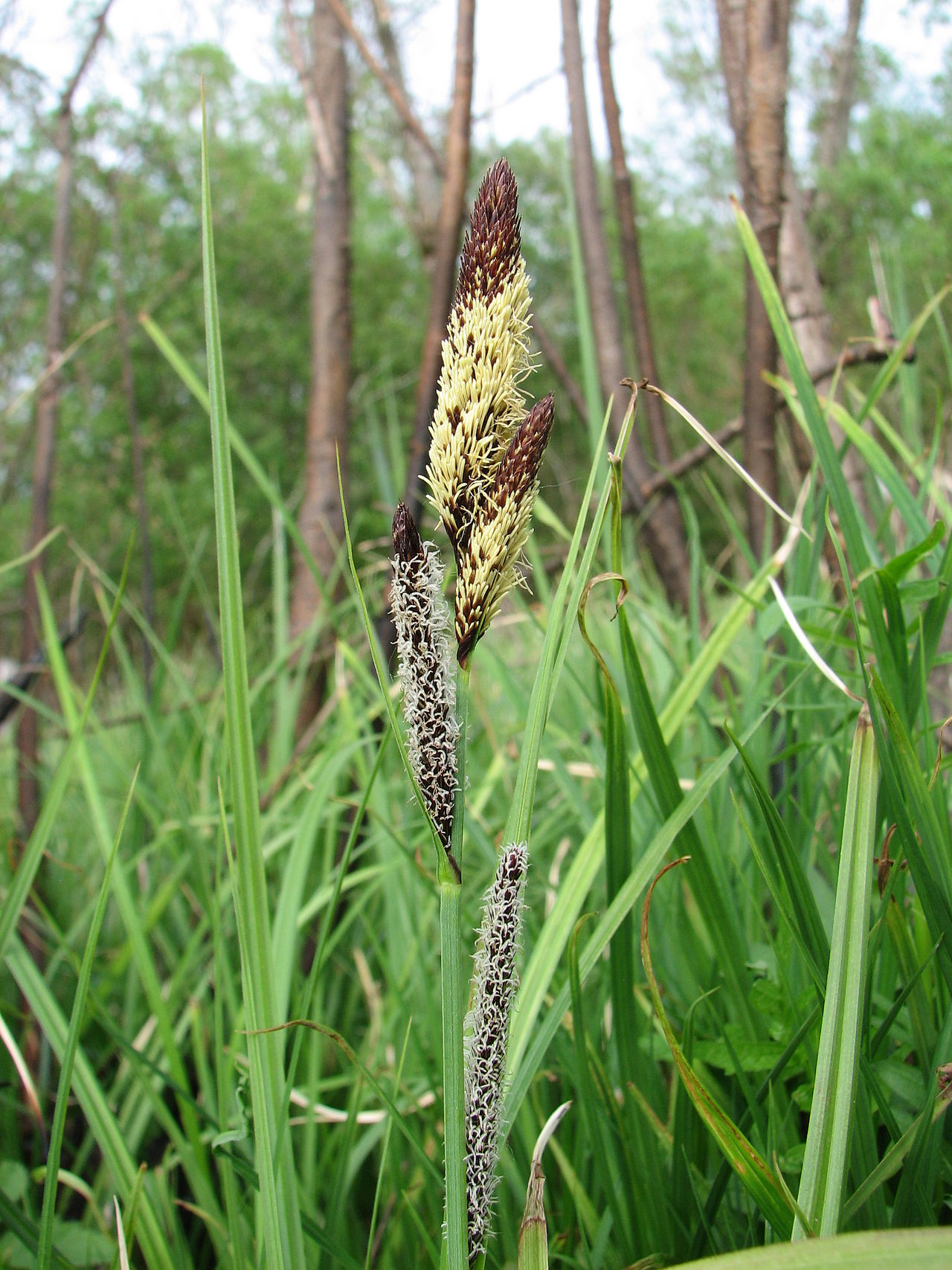
The lesser pond-sedge is a perennial herbaceous plant reaching heights between 30 and 150 centimeters. It is characterized by its sturdy, sharply triangular stems and blue-green leaves that can be up to 15 millimeters wide. As a rhizomatous species, it frequently forms extensive dominant stands in silting zones and wet meadows. The flowering period lasts from May to June, with the male spikes positioned clearly above the female ones.
Details
Oxygen production
Minor via photosynthesis, more important is the oxygen transport to the rhizome (aerenchyma).
Habitat function
Serves as spawning substrate for amphibians and as a nesting site for ground-nesting birds.
Nutrient uptake
High; effective in absorbing dissolved nutrients from the sediment.
Food source for
Seeds serve as food for birds; leaves are used by caterpillars of some noctuid moths.
Human use
Used in constructed wetlands for water purification; formerly used as weaving material or bedding.
Ecology
Ecological role
Important primary producer, contributes to peat formation and provides structure in aquatic transition zones.
Natural predators
Muskrats, various insect larvae (e.g., gout flies).
Competitor species
Common reed (Phragmites australis), slender tufted-sedge (Carex acuta).
Ecosystem service
Bank stabilization, nitrogen and phosphorus retention, carbon sequestration.
Threats
Drainage of wetlands, intensive agriculture, excessive eutrophication.
Scientific profile
Profile
Reproduction
Reproduction occurs generatively via seeds (dispersal by water/birds) and very effectively vegetatively via vigorous, long-creeping rhizomes, leading to the formation of extensive dominant stands (sedge mires).
Protection & threats
Main threats
Threatened by the drainage of wetlands, intensive agricultural use (excessive eutrophication), and the loss of natural flooding dynamics.