River Pea Clam
Pisidium amnicum
The River Pea Clam is a small freshwater bivalve, distinguished by its relatively large size for the genus and prominent concentric ridges on the shell. It primarily inhabits flowing waters and the wave-washed zones of lakes with sandy or gravelly substrates. As a filter feeder, it plays a significant role in the nutrient cycling of aquatic ecosystems. The species is sensitive to water pollution, acidification, and habitat destruction caused by river engineering.
Details
Identification
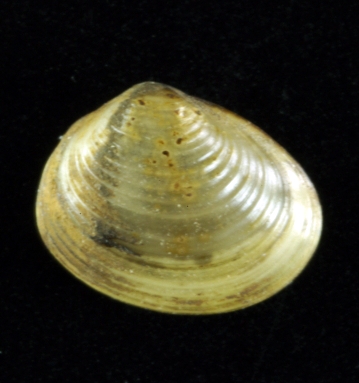
Shell robust and thick-walled, obliquely triangular-oval; surface with coarse, regular concentric ridges; umbo located distinctly behind the center.
Social behavior
Lives solitarily buried in the sediment, but can occur in high individual densities under favorable conditions.
Diet
Filters organic material (detritus) as well as microorganisms such as bacteria and phytoplankton from the water and the sediment interface.
Spawning substrate
Not applicable, as the species is ovoviviparous and the larvae develop in brood pouches within the gills.
Overwintering
Remains in the sediment and reduces metabolic activity during the cold period.
Ecology
Ecological role
Important primary consumer contributing to water clarification and aerating the sediment through its burrowing activity.
Natural predators
Fish (especially cyprinids), waterfowl, and predatory invertebrates such as leeches.
Competitor species
Other Pisidium species and invasive clams like the Asian clam (Corbicula fluminea).
Ecosystem service
Contributes to the self-purification of water bodies through filtration and nutrient recycling.
Threats
Water pollution, eutrophication, river engineering, and the resulting siltation of the substrate.
Scientific profile
Profile
Distinguishing features
Large size (usually >7 mm), coarse concentric striations on the shell surface, umbo significantly shifted posteriorly, only one functional siphon (anal siphon) present.
Reproduction
Hermaphroditic, ovoviviparous; embryos develop in special brood pouches within the gills and are released as fully developed juvenile clams.