Blue-green algae (Microcystis)
Microcystis aeruginosa
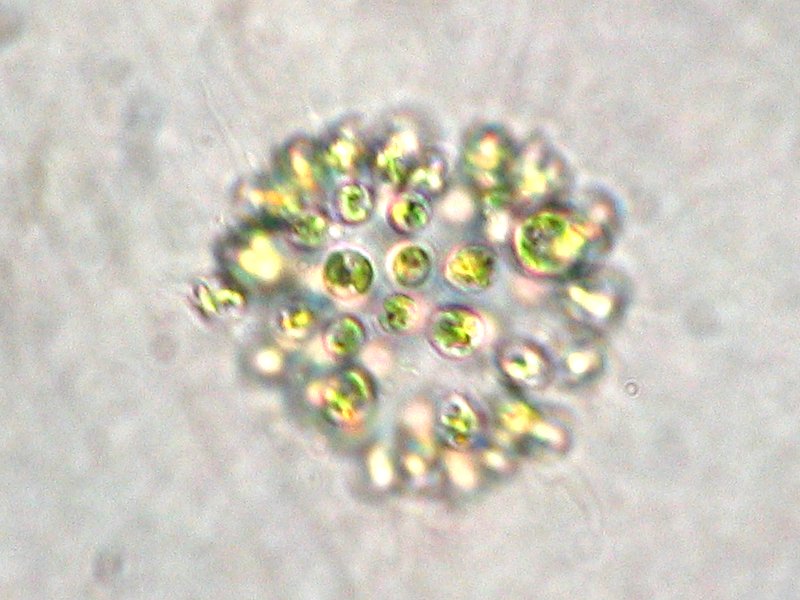
Microcystis aeruginosa is a globally distributed species of cyanobacteria known for forming dense, blue-green surface blooms in nutrient-rich freshwater bodies. These bacteria produce microcystins, potent hepatotoxins that can be harmful to animals and humans. The colonies consist of numerous small cells embedded in a gelatinous matrix and use gas vacuoles to regulate their buoyancy within the water column.
Details
Oxygen production
High during photosynthesis during the day; however, leads to oxygen depletion at night and during the decomposition of biomass.
Habitat function
Provides habitat for associated bacterial films within the mucilaginous sheath.
Nutrient uptake
Highly efficient uptake of dissolved phosphate and ammonium.
Food source for
Limited availability for zooplankton due to size and toxicity.
Human use
No direct use; relevant in drinking water treatment and bathing water management due to health risks.
Ecology
Ecological role
Primary producer at the base of the food chain, but can destabilize the ecosystem during mass proliferation through toxin release and oxygen depletion.
Natural predators
Filter feeders such as Daphnia, certain rotifers, and some specialized fish, although toxicity limits predation.
Competitor species
Other phytoplankton species such as green algae (Chlorophyceae) and diatoms (Bacillariophyceae).
Ecosystem service
Carbon fixation and oxygen production during the growth phase.
Threats
Water restoration measures, reduction of nutrient inputs (phosphate elimination).
Scientific profile
Profile
Distinguishing features
Possesses gas vacuoles (aerotopes) for buoyancy regulation; formation of dense surface blooms; production of microcystins (hepatotoxins); colonies often appear perforated (clathrate).
Reproduction
Asexual reproduction by binary fission in three planes; colonies enlarge through cell division and later fragment.
Protection & threats
Status not on standard scale
Main threats
Not threatened; benefits from eutrophication and global warming (invasive tendency in degraded ecosystems).
Conservation measures
No conservation measures required; management aims at reducing nutrient inputs (P-elimination) to prevent mass developments.