Horned Pondweed
Zannichellia palustris
Horned pondweed is a perennial, submerged aquatic plant with extremely narrow, thread-like leaves. It belongs to the Potamogetonaceae family and is distributed worldwide in both freshwater and brackish water environments. The plant forms branched stems and is known for its characteristic horn-shaped curved fruits.
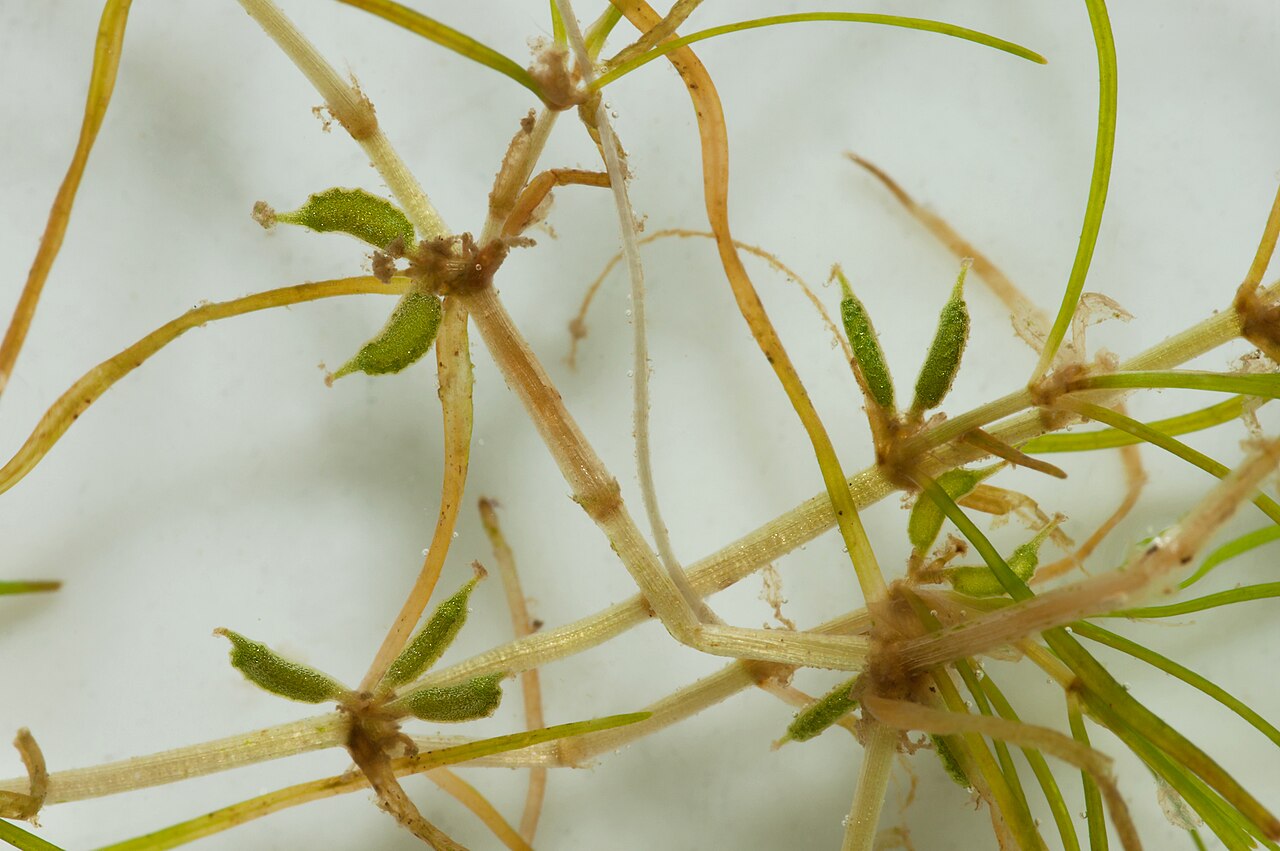
Details
Oxygen production
High, as the entire plant performs photosynthesis while submerged.
Habitat function
Important spawning ground for fish and substrate for periphytic algae.
Nutrient uptake
Efficient uptake of dissolved phosphates and nitrates directly from the water column.
Food source for
Seeds and plant parts serve as food for waterfowl; leaves are eaten by aquatic insect larvae.
Human use
Occasional use in aquaristics and for the restoration of smaller standing water bodies.
Ecology
Ecological role
Serves as a primary producer, oxygen provider, and provides important habitat and hiding places for invertebrates and juvenile fish.
Natural predators
Waterfowl, herbivorous fish (e.g., rudd), and aquatic snails.
Competitor species
Other submerged macrophytes such as Potamogeton species, Ceratophyllum demersum, or invasive Elodea species.
Ecosystem service
Nutrient fixation, sediment stabilization, and improvement of water quality through oxygen release.
Threats
Excessive eutrophication, herbicide input from agriculture, and mechanical disturbances from water body maintenance.
Scientific profile
Profile
Reproduction
Generative via seeds (oospores) dispersed by water currents, and vegetative via creeping rhizomes and shoot fragmentation.
Protection & threats
Main threats
Excessive eutrophication (leading to algal mats), mechanical stress from shipping, herbicide input from agriculture, and river engineering.