English Oak
Quercus robur
The English oak is a large, deciduous tree reaching heights of up to 40 meters and can live for over 1000 years. It is characterized by its short-stalked, lobed leaves and acorns that grow on long stalks (peduncles). As a keystone species, it supports a vast diversity of insects and other wildlife. It plays a crucial role in ecosystems, particularly in hardwood floodplain forests.
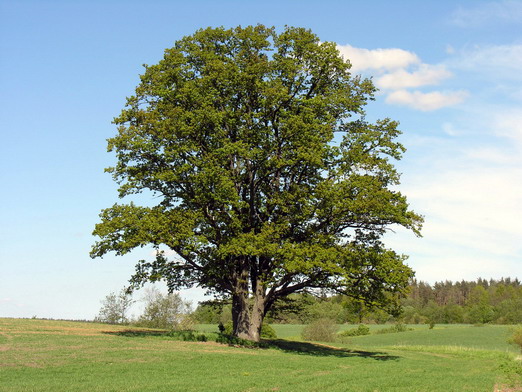
Details
Oxygen production
High due to the large leaf biomass of mature trees.
Habitat function
Important nesting tree for birds of prey; habitat for specialized saproxylic beetles like the great capricorn beetle; food source through acorn mast.
Nutrient uptake
Medium to high; deep taproot system for accessing nutrients and water.
Food source for
Eurasian jay, squirrels, wild boar, roe deer, over 400 insect species.
Human use
Used as robust construction timber (shipbuilding, half-timbering), for wine barrels, furniture making, and historically for pig mast (acorn mast).
Ecology
Ecological role
Keystone species for biodiversity; provides habitat for hundreds of insect species (especially lepidoptera and beetles) as well as fungi, lichens, and birds.
Competitor species
European beech (on shady sites), ash and elm (in floodplains).
Ecosystem service
High-quality timber production, carbon sequestration, erosion control in floodplains, soil water retention.
Threats
Climate change (increased drought stress), oak decline (complex disease), invasive pests such as the oak processionary moth.