Caulobacter
Caulobacter
Caulobacter is a genus of Gram-negative bacteria within the class Alphaproteobacteria, widely distributed in oligotrophic freshwater habitats. They are characterized by a unique asymmetric cell division cycle that produces a sessile stalked cell and a motile swarmer cell. The stalked cells utilize an extremely strong biological adhesive, known as the holdfast, to attach themselves to surfaces. Due to their specialized cell biology, they serve as a key model organism for studying cell cycle regulation and cellular differentiation.
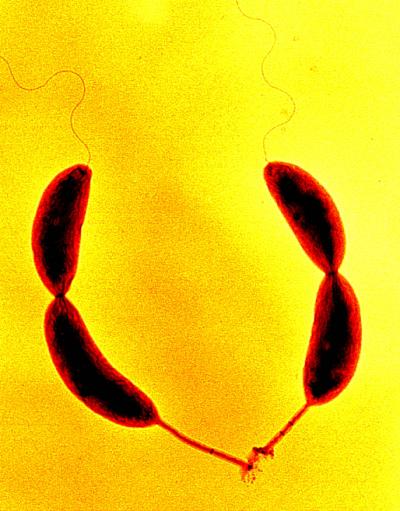
Details
Identification
Characteristic asymmetric cell division; presence of a prostheca (stalk) in sessile cells; flagellum in swarmer cells; microscopic, rod-shaped to slightly curved morphology.
Social behavior
Often form biofilms by attaching to solid substrates or other microorganisms using their holdfast organ.
Diet
Heterotrophic; they utilize dissolved organic carbon (DOC) at very low concentrations and are specialized for efficiency in nutrient-poor environments.
Ecology
Ecological role
Important component of the microbial loop in lakes and rivers; contributes to the decomposition of organic matter under oligotrophic conditions.
Natural predators
Bacterivorous protists (e.g., flagellates and ciliates) and bacteriophages.
Competitor species
Other oligotrophic bacteria such as members of the Sphingomonadales.
Ecosystem service
Nutrient recycling and purification of surface waters through the degradation of trace organic substances.
Threats
Eutrophication of water bodies, as they can be outcompeted by fast-growing copiotrophic bacteria.
Scientific profile
Profile
Habitat
Primarily found in limnic ecosystems (freshwater such as lakes and rivers), but also detected in marine habitats and soils. They preferentially colonize surfaces in oligotrophic waters and are often part of biofilms.
Ecological role
Important role in the nutrient cycling of oligotrophic waters; primary colonizers of surfaces. Due to the strong adhesion of the holdfast (one of the strongest biological glues), they contribute to the stability of biofilms.