Blue-green algae (Cyanobacteria)
Cyanobacteria
Cyanobacteria are a phylum of prokaryotes that obtain their energy through oxygenic photosynthesis. Despite their common name 'blue-green algae', they are bacteria and not eukaryotic algae. They play a critical role in global carbon and nitrogen cycles and are known for forming massive blooms in nutrient-rich aquatic environments.
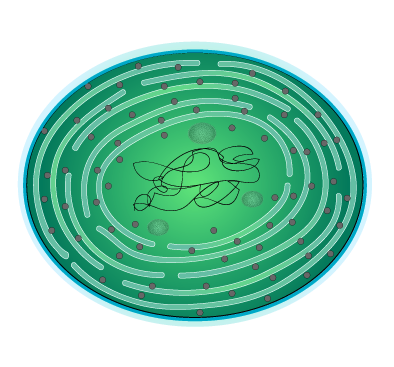
Details
Oxygen production
Very high; responsible for the original oxygenation of the Earth's atmosphere.
Habitat function
Base of the aquatic food web; pioneers in extreme environments.
Nutrient uptake
High uptake of phosphates and nitrates; nitrogen fixation from the atmosphere.
Food source for
Zooplankton, filter feeders, certain fish species.
Human use
Dietary supplements (e.g., Spirulina), biomass production, pharmaceutical research.
Ecology
Ecological role
Primary producers; many species can fix atmospheric nitrogen, making it available for the ecosystem.
Natural predators
Zooplankton (e.g., Daphnia), herbivorous fish, bivalves.
Competitor species
Green algae, diatoms, submerged macrophytes.
Ecosystem service
Oxygen production via photosynthesis; nitrogen fixation in nutrient-poor environments.
Threats
Generally not threatened; benefiting from climate change and nutrient loading.
Scientific profile
Profile
Distinguishing features
Prokaryotic cell structure without a true nucleus; possession of gas vacuoles for regulating vertical position in the water column; characteristic blue-green coloration due to phycocyanin; ability for oxygenic photosynthesis.
Reproduction
Asexual via binary fission, fragmentation of filaments (hormogonia), or formation of resting stages (akinetes).
Protection & threats
Main threats
No threat; cyanobacteria are beneficiaries of global change (eutrophication, rising water temperatures).
Conservation measures
Not applicable; management measures focus on reducing nutrient inputs (P-elimination) to prevent mass developments.