Ochreous Long-horned Caddis
Oecetis ochracea
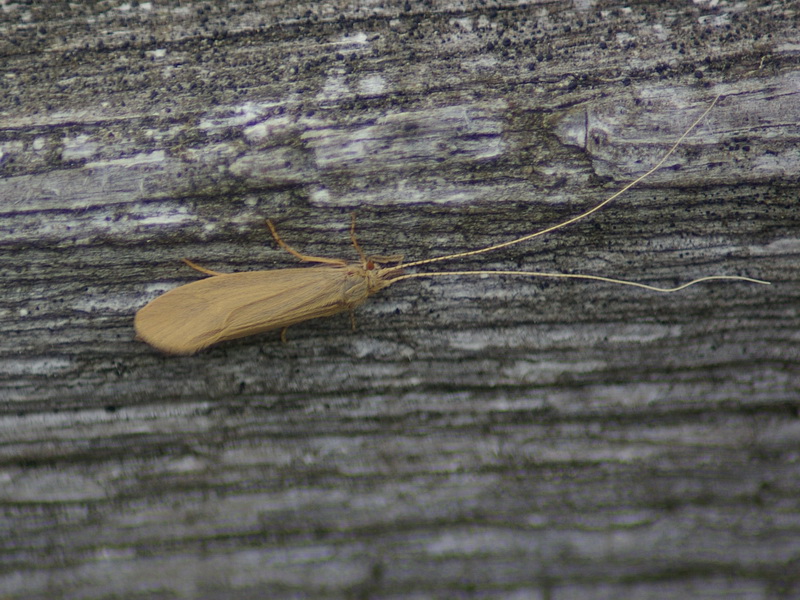
The Ochreous Long-horned Caddis is a common species in Central Europe belonging to the Leptoceridae family. It is characterized by its extremely long, filiform antennae, which often exceed twice its body length. Adults possess pale yellow to ochreous wings and are primarily active during twilight near standing water bodies. The larvae are predatory, living at the bottom of lakes and ponds, where they construct portable cases made of fine sand grains.
Details
Identification
Antennae significantly longer in males than in females; forewings ochreous without dark spots; leg spur formula 1-2-2.
Social behavior
Adults often form small swarms over the water surface during mating season; larvae are solitary.
Diet
The larvae are primarily predatory, feeding on small invertebrates such as chironomid larvae or small crustaceans.
Hunting strategy
Ambush predator or active searching on the water body floor.
Spawning substrate
Eggs are deposited in gelatinous masses on aquatic plants or directly into the water.
Overwintering
Overwintering occurs in the larval stage within the aquatic sediment.
Ecology
Ecological role
Important consumer in the benthic zone and a significant food source for fish and waterfowl.
Natural predators
Fish (e.g., trout, roach), dragonfly larvae, predatory water bugs, and birds.
Competitor species
Other predatory caddisfly larvae and benthic insect larvae.
Ecosystem service
Contribution to the nutrient cycle in water bodies and part of the food chain.
Threats
Destruction of riparian vegetation, chemical pollution of water bodies, and light pollution attracting adults away from breeding sites.
Scientific profile
Profile
Distinguishing features
The primary feature of the Leptoceridae family is the extremely long, filiform antennae, which in Oecetis ochracea males can reach two to three times the body length. The genus Oecetis is distinguished by specific wing venation, where the R2 cell is notably long and narrow.
Role in food web
As predators, the larvae regulate populations of smaller invertebrates. They themselves serve as an important food source for fish.
Protection & threats
Main threats
Destruction of natural shoreline structures, excessive eutrophication of water bodies, and light pollution that lures adults away from their habitats.
Population trend
Stable; the species is widespread and common in Central Europe.
Conservation measures
Maintenance and restoration of near-natural shoreline zones, prevention of nutrient input into lakes, and reduction of unnecessary lighting near water bodies.