Gutweed
Ulva intestinalis
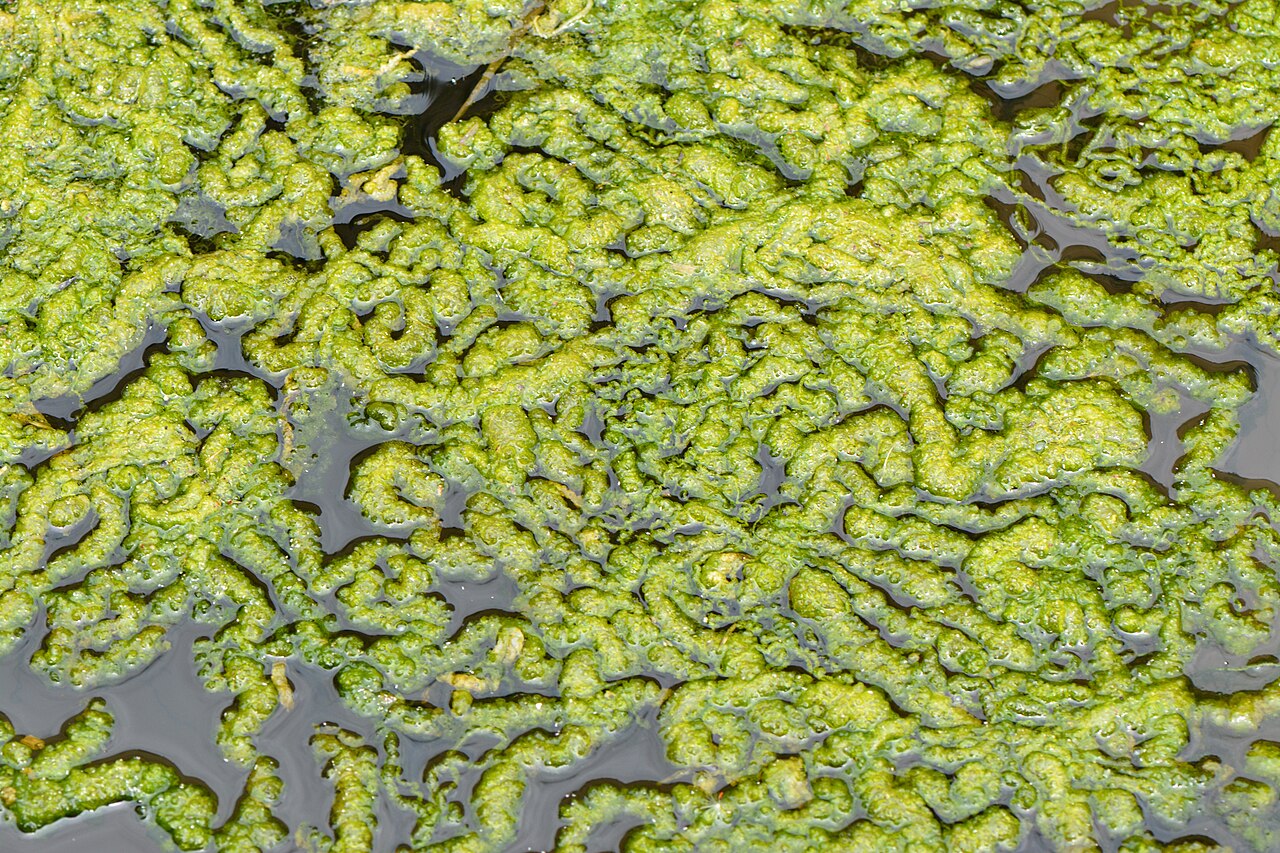
Ulva intestinalis, commonly known as gutweed or grass kelp, is a green macroalga characterized by its hollow, tubular thallus that is often inflated with gas bubbles. It predominantly inhabits intertidal zones, estuaries, and nutrient-rich coastal waters, though it can also be found in saline inland habitats. The species is highly resilient to fluctuations in environmental factors such as salinity and temperature. Under high nutrient loads, it tends to form massive blooms, serving as an indicator of eutrophication.
Details
Oxygen production
Very high during the light phase; contributes significantly to oxygen saturation in the littoral zone.
Habitat function
Serves as a nursery for marine organisms and as a substrate for epibionts.
Nutrient uptake
Extremely efficient uptake of inorganic nitrogen and phosphorus from the water column.
Food source for
Wigeons, brent geese, crustaceans, and marine snails.
Human use
Edible (often dried as seasoning or in salads), used in the cosmetics industry and as fertilizer.
Ecology
Ecological role
Important primary producer and oxygen supplier; provides shelter and habitat for small invertebrates and fish larvae.
Natural predators
Periwinkles (Littorina), amphipods, various herbivorous fish, and waterfowl.
Competitor species
Other Ulva species, filamentous green algae, and phytoplankton (competition for light and nutrients).
Ecosystem service
Oxygen production, sequestration of excess nutrients (nitrate/phosphate), carbon dioxide fixation.
Threats
Herbicide pollution in estuaries, ocean acidification (locally), destruction of coastal habitats.
Scientific profile
Profile
Reproduction
Isomorphic alternation of generations between diploid sporophytes and haploid gametophytes. Asexual reproduction via quadriflagellate zoospores; sexual reproduction via biflagellate gametes (anisogamy).
Protection & threats
Main threats
Not threatened; benefits from anthropogenic eutrophication. Locally affected by herbicide pollution or extreme physical disturbances (coastal engineering).