Chicken of the woods
Laetiporus sulphureus
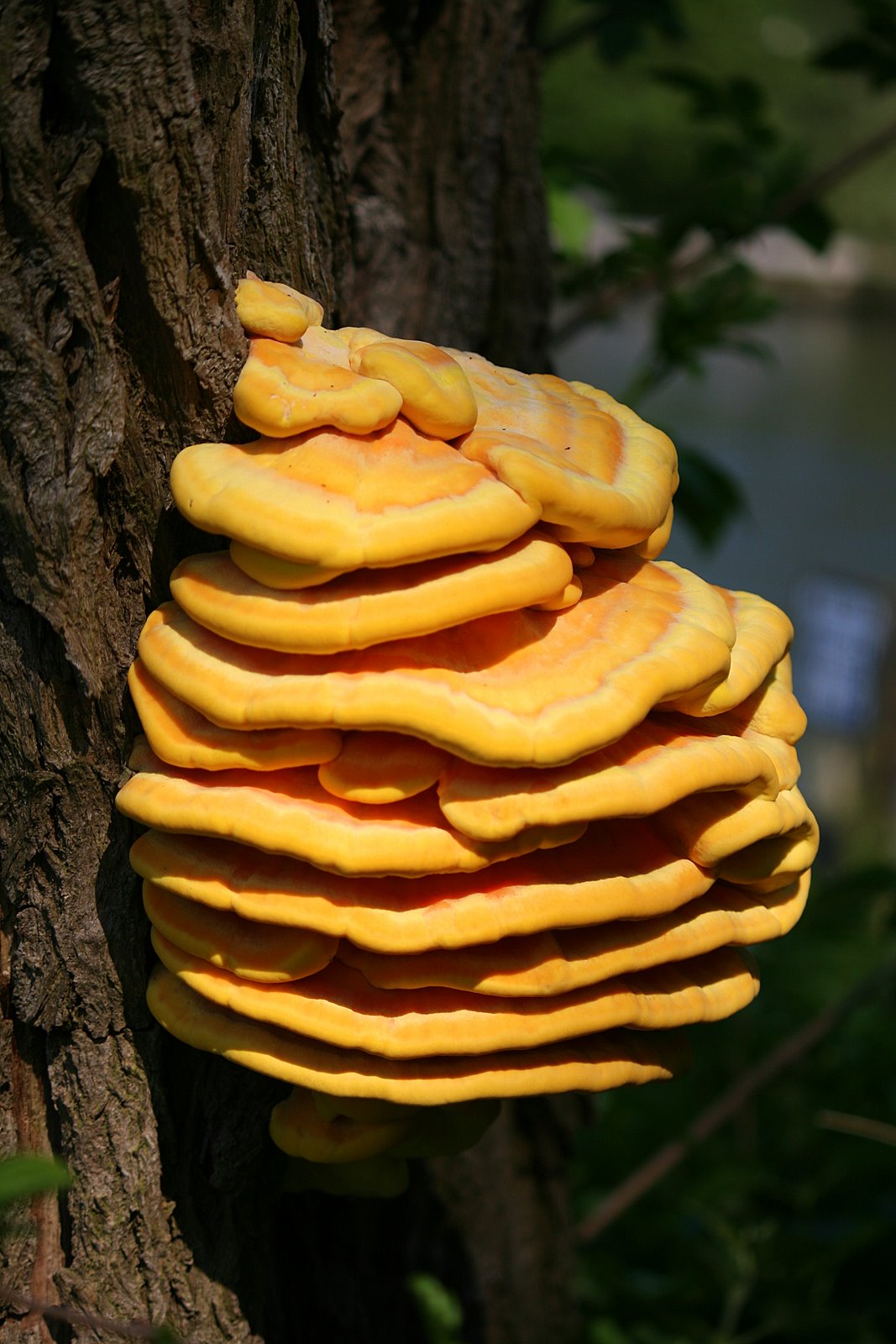
The Sulphur polypore is a striking wood-decaying fungus easily recognized by its bright yellow to orange, shelf-like fruiting bodies. It primarily inhabits deciduous trees such as oaks, willows, and poplars, acting as both a parasite on living trees and a saprobe on dead wood. By decomposing cellulose, it causes significant brown rot, which weakens the heartwood and facilitates the formation of hollows used by various wildlife. When young, it is a highly regarded edible mushroom with a texture and flavor reminiscent of chicken.
Details
Identification
Fan-shaped, overlapping caps; upper surface sulfur-yellow to orange; underside with fine yellow pores; flesh succulent when young, brittle and chalky when old.
Diet
Lignicolous saprobe and parasite; decomposes cellulose while leaving lignin behind (brown rot).
Overwintering
Overwinters as mycelium within the wood of the host tree.
Ecology
Ecological role
Decomposer of dead wood and weakness parasite on living trees; creates habitat for cavity nesters through heart rot.
Natural predators
Various beetle larvae (e.g., Erotylidae) and slugs.
Competitor species
Other wood-decaying fungi such as the oak bracket (Phellinus robustus).
Ecosystem service
Nutrient recycling through wood decomposition; promoting biodiversity by facilitating tree cavity formation.
Threats
Removal of old and dead wood in managed forests and urban parks.
Scientific profile
Profile
Distinguishing features
Bright yellow to orange, fan-shaped fruiting bodies; soft, succulent texture when young; acidic smell; occurrence on living deciduous trees (especially Oak).
Habitat
Floodplain forests, parks, orchards, avenues, and deciduous mixed forests with a high proportion of old trees.
Reproduction
Sexual reproduction via basidiospores; spores are produced in fine pores (3-4 per mm) on the underside of the fruiting body.