Muskrat
Ondatra zibethicus
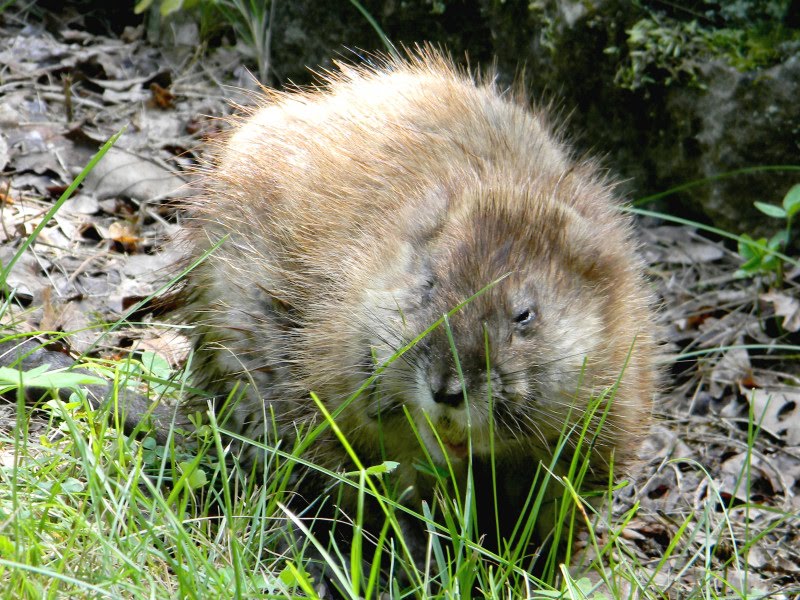
The muskrat is a large, semi-aquatic rodent native to North America that has successfully colonized most of Eurasia. It is the largest species in the vole family and is easily recognized by its vertically flattened, scaly tail which acts as a rudder. These animals are highly adapted to aquatic life, possessing dense waterproof fur and specialized hind feet for swimming. In many regions, they are considered invasive pests because their extensive burrowing often undermines the structural integrity of dikes and dams.
Details
Identification
Vertically flattened tail; dense brown underfur; hind feet with swimming bristles; stocky body with a short neck.
Social behavior
Territorial during the breeding season; lives in family groups; uses scent glands for territory marking.
Diet
Primarily herbivorous (aquatic plants, reeds, herbs), occasionally consumes animal matter such as mussels, crustaceans, or fish.
Hunting strategy
Foraging for plant material; active searching for mussels on the water bottom.
Overwintering
Active; uses stored food and protects itself from extreme temperatures in insulated burrows or lodges.
Ecology
Ecological role
Influences vegetation structure in wetlands; serves as prey for predators; invasive damage to hydraulic structures.
Natural predators
Mink, red fox, eagle owl, white-tailed eagle, northern pike (for juveniles).
Competitor species
Nutria, brown rat, beaver (partial spatial or food competition).
Ecosystem service
Creation of clearings in reed beds, which can locally increase biodiversity.
Threats
Targeted control by humans; habitat loss due to river channelization.
Scientific profile
Profile
Distinguishing features
Strongly laterally flattened, nearly hairless and scaly tail; hind feet significantly larger than forefeet and equipped with swimming bristles (not true webs); ears almost entirely hidden in the fur.
Habitat
Banks of standing and flowing waters, marshes, swamps, canals, and ditches; prefers water bodies with abundant riparian vegetation and soils suitable for excavating burrows.
Diet
Primarily herbivorous (aquatic plants, reeds, cattails, crops); opportunistically consumes animal proteins such as mussels (e.g., pond mussels), crayfish, and rarely dead fish.
Protection & threats
Main threats
Not threatened in Europe; the species is subject to management for population reduction due to its invasive status and damage to infrastructure.
Population trend
Widespread and stable, regionally declining due to intensive control measures.
Conservation measures
No conservation measures; the species is listed on the list of Invasive Alien Species of Union concern (EU Regulation 1143/2014).