Tufted-sedge
Carex elata
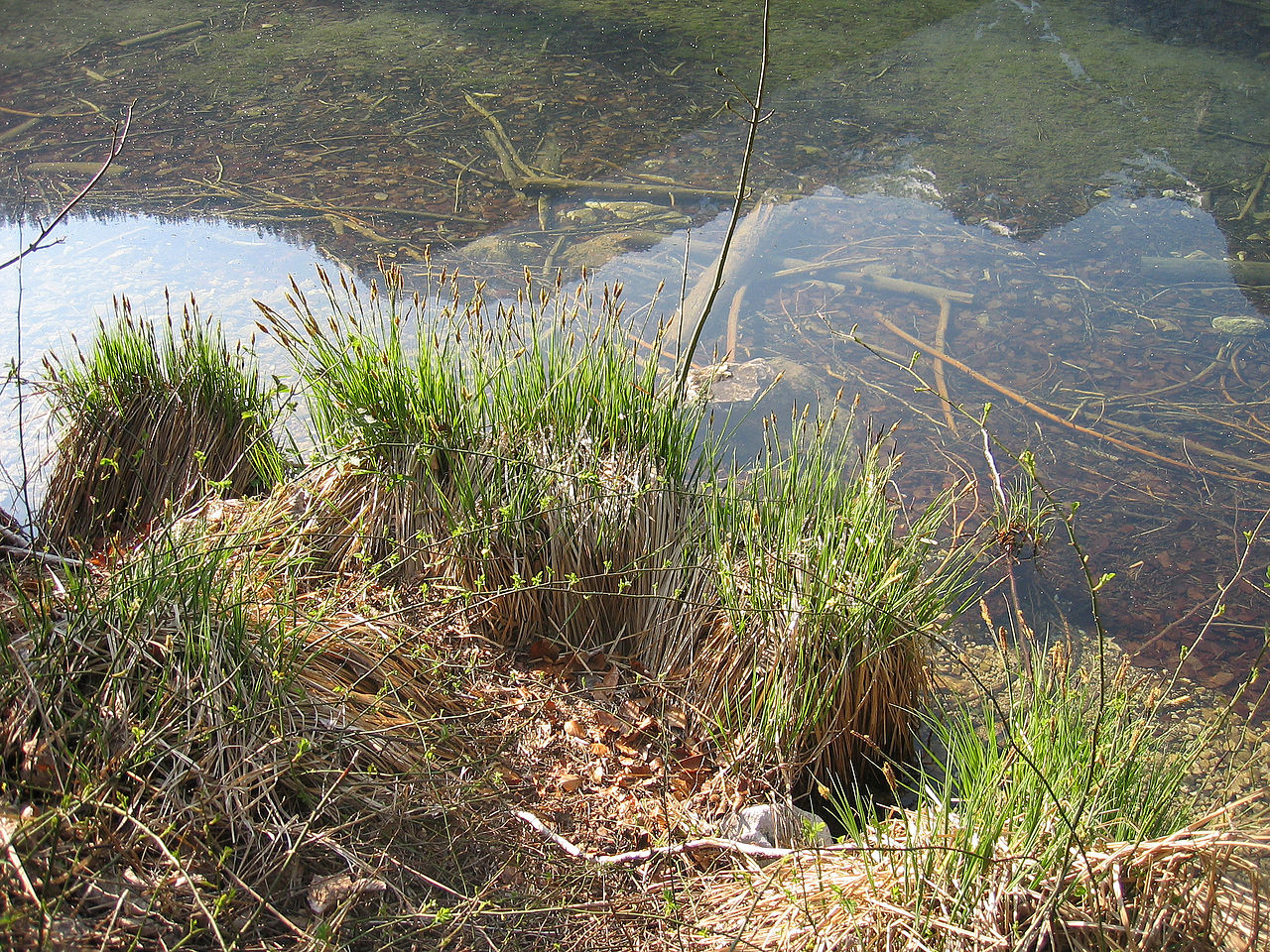
The tufted-sedge is a perennial sedge that forms prominent, firm tussocks (mounds) reaching heights of up to 120 cm. It is a characteristic species of large-sedge swamps and prefers base-rich, wet habitats such as lakeshores or fens. Its stiff, grey-green leaves and the ladder-like fiber network of the basal sheaths are distinctive features. The plant plays a vital role in the ecology of silting zones by providing structure and habitat.
Details
Oxygen production
Minor via photosynthesis, more important is the oxygen transport to the rhizosphere via the aerenchyma.
Habitat function
Provides nesting sites for rails and reed warblers, cover for juvenile fish, and habitat for specialized beetles.
Nutrient uptake
High potential for nitrogen and phosphorus uptake, contributing to the purification of surface water.
Food source for
Seeds serve as food for waterfowl; leaves as larval food for various butterflies and moths.
Human use
Used as an ornamental plant in water gardens (esp. cultivar 'Aurea'), historically used as stable litter (sour hay).
Ecology
Ecological role
Primary producer in wetlands, structure-forming species providing nesting sites for waterfowl and shelter for fish during high water levels.
Natural predators
Muskrats (eat rhizomes), various specialized insect larvae.
Competitor species
Common reed (Phragmites australis) when water levels drop, other large sedges like Carex acutiformis.
Ecosystem service
Shoreline stabilization, nutrient filtration from water, carbon sequestration in peat soils.
Threats
Drainage of wetlands, eutrophication due to fertilizer runoff, abandonment of traditional litter meadow management.
Scientific profile
Profile
Reproduction
Generative via seeds (wind pollination/anemophily) and vegetative via short rhizomes, leading to the formation of characteristic, very stable tussocks.
Protection & threats
Main threats
Threatened by drainage of wetlands, lowering of groundwater tables, eutrophication (leading to displacement by reeds), and abandonment of traditional litter meadow mowing.