Rhodobacter
Rhodobacter
Rhodobacter is a genus of Gram-negative, rod-shaped or ovoid purple non-sulfur bacteria within the Alphaproteobacteria class. They are renowned for their extraordinary metabolic versatility, capable of growing photoautotrophically, photoheterotrophically, chemoautotrophically, or chemoheterotrophically depending on environmental conditions. These bacteria perform anoxygenic photosynthesis, utilizing light as an energy source without producing oxygen.
Details
Identification
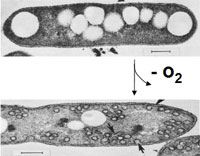
Gram-negative staining, rod-shaped to ovoid morphology, formation of vesicles or lamellae in the cytoplasm for photosynthesis, often reddish to brownish pigmentation due to carotenoids.
Social behavior
Formation of biofilms and aggregates in aquatic habitats.
Diet
Highly variable; can utilize organic compounds (heterotrophy) or inorganic compounds such as CO2 (autotrophy). Energy source is either light (phototrophy) or chemical oxidation (chemotrophy).
Ecology
Ecological role
Plays a central role in the carbon, nitrogen, and sulfur cycles in stagnant waters and sediments.
Natural predators
Bacteriovorous protozoa (unicellular organisms) and bacteriophages (viruses).
Competitor species
Other phototrophic bacteria such as purple sulfur bacteria or green algae in similar light niches.
Ecosystem service
Degradation of pollutants in water bodies, nitrogen fixation, and contribution to primary production in anoxic zones.
Scientific profile
Profile
Habitat
Widely distributed in freshwater and marine ecosystems, wastewater, manure, and moist soils. They often colonize the interface between anoxic and oxic zones in sediments, where they benefit from light and organic acids.
Ecological role
Important players in the global carbon, nitrogen, and sulfur cycles. They contribute to primary production in anoxic layers and are used in biotechnology for wastewater treatment as well as the production of bio-hydrogen and bioplastics (PHB).