Yellow Morel
Morchella esculenta
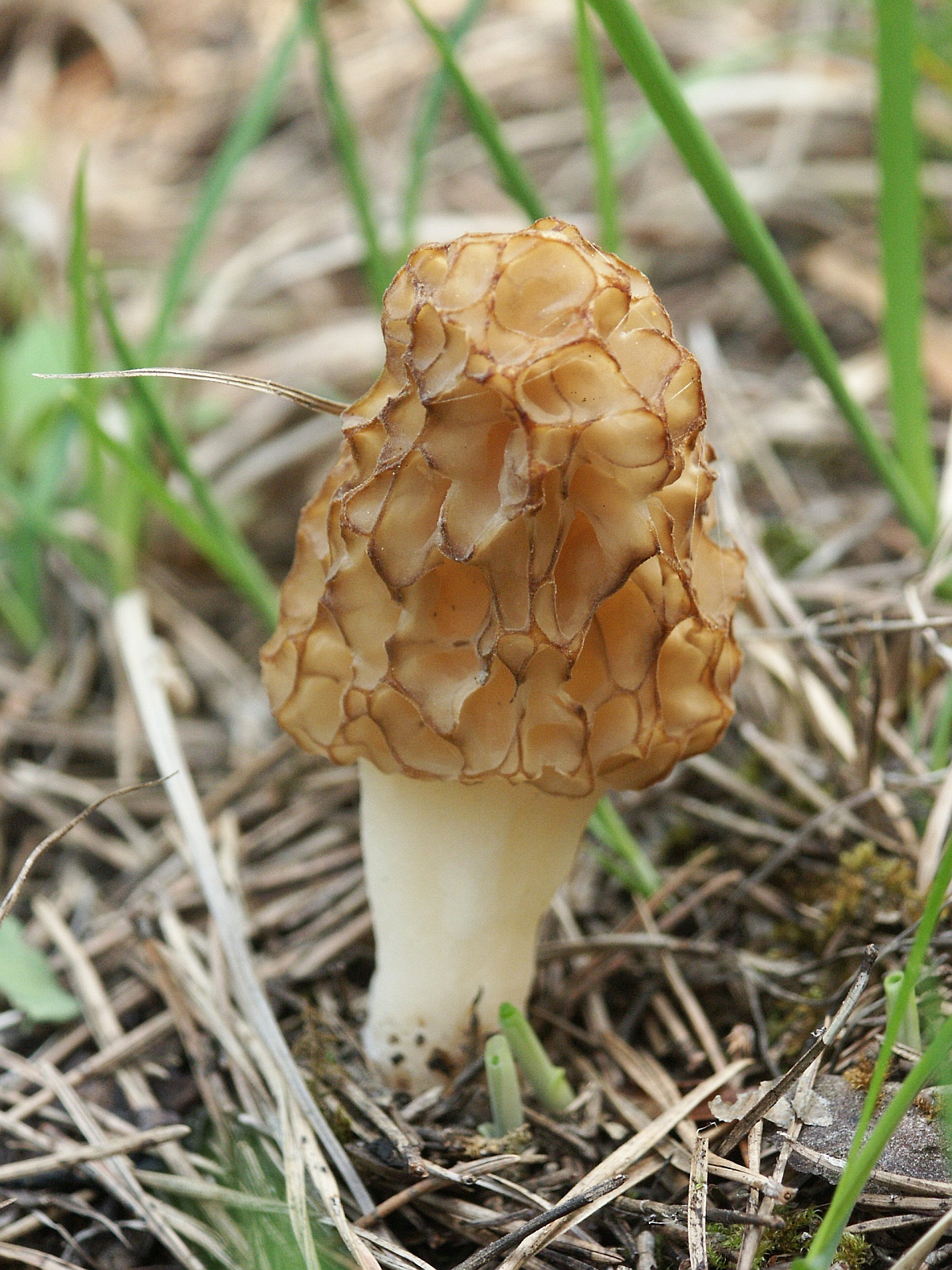
The yellow morel is an ascomycete fungus featuring a hollow, yellowish-brown cap with a distinct honeycomb-like structure. It appears in spring, typically associated with ash trees or lime-rich riparian forests. The fruiting body consists of a cap and a stem, both of which are hollow inside.
Details
Identification
Honeycomb-like, hollow cap with longitudinal and transverse ridges; hollow stem; cap margin fused directly to the stem; appears in spring (March to May).
Diet
Lives saprotrophically on organic matter or forms facultative mycorrhizal associations, especially with ash trees.
Overwintering
Overwintering as mycelium or sclerotium in the soil.
Ecology
Ecological role
Decomposer of organic matter and symbiotic partner for certain tree species; contributes to the nutrient cycle.
Natural predators
Slugs, insect larvae, rodents.
Competitor species
Other soil-dwelling fungi of riparian forests.
Ecosystem service
Nutrient recycling through decomposition; mycorrhiza formation supports the vitality of trees.
Threats
Habitat loss due to drainage of riparian forests, intensive forestry, and nitrogen deposition in soils.
Scientific profile
Profile
Distinguishing features
Entirely hollow fruiting body (cap and stipe); cap margin firmly fused to the stipe; honeycomb-like structure; appearance in spring.
Habitat
Alluvial forests, open deciduous forests, orchards, calcareous grasslands, gardens, and parks with base-rich soils.
Reproduction
Sexual reproduction via ascospores produced in sacs (asci). Asexual reproduction possible via sclerotia.