Swamp Crab Spider
Xysticus ulmi
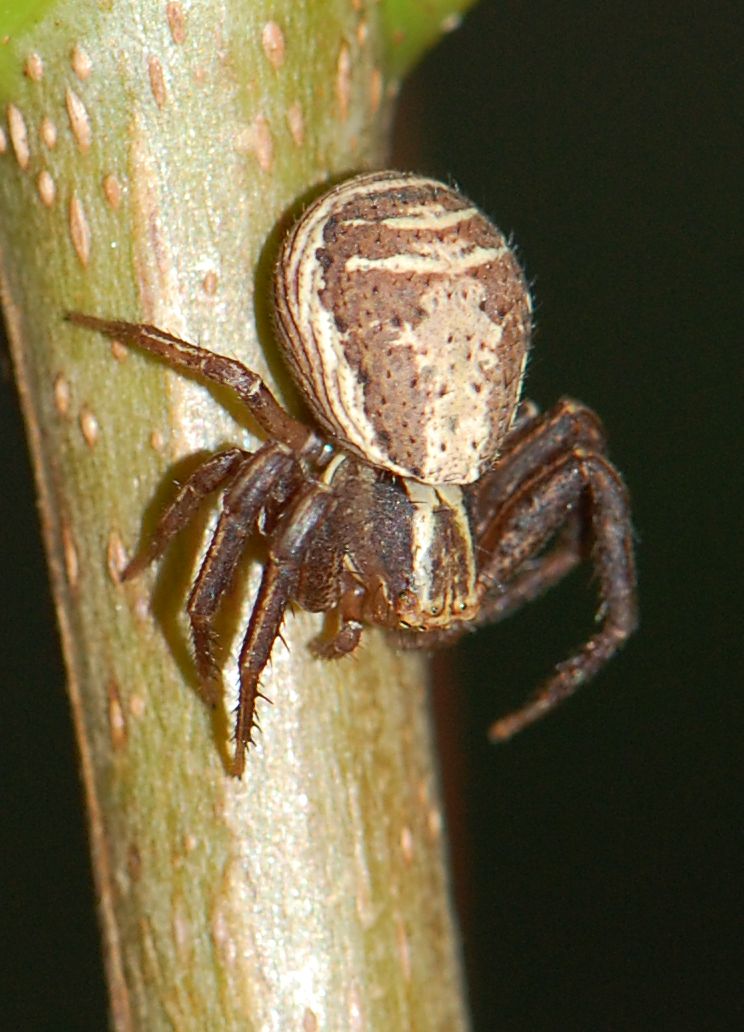
Xysticus ulmi is a spider in the family Thomisidae, characterized by its flattened body and crab-like leg posture. Its coloration typically ranges from brown to beige with a distinct leaf-like pattern (folium) on the abdomen. It prefers damp habitats such as bogs, riparian zones, and wet meadows, where it waits for prey in the herbaceous layer. Unlike many other crab spiders, it is less specialized on flowers and is often found on the ground or on stalks.
Details
Identification
Flattened body shape, first two pairs of legs significantly longer and stronger, dark folium (leaf pattern) on the abdomen with light margins.
Social behavior
Solitary living; exhibits intraspecific aggression and cannibalism.
Diet
Feeds on a variety of small insects such as flies, mosquitoes, ants, and smaller beetles.
Hunting strategy
Ambush predator without web-building; uses powerful front legs for lightning-fast capture of prey.
Spawning substrate
Vegetation (leaves or stalks near the ground)
Overwintering
Overwintering as subadult in leaf litter, moss, or under bark.
Ecology
Ecological role
Important predator in the herbaceous layer of wetlands for the regulation of insect populations.
Natural predators
Insectivorous birds, lizards, ichneumon wasps, and larger predatory spiders.
Competitor species
Other crab spiders (e.g., Xysticus cristatus) and wolf spiders in similar habitats.
Ecosystem service
Natural pest control in wetland biotopes.
Threats
Destruction of wetland habitats, drainage of bogs, and intensive mowing of meadows.
Scientific profile
Profile
Distinguishing features
Characteristic is the V-shaped marking on the prosoma, which in Xysticus ulmi often extends to the posterior margin. The first two pairs of legs are significantly longer and stronger than the rear ones (crab-like habitus). Reliable identification often requires examination of genital structures (epigyne/palpal bulb) due to potential confusion with other members of the genus.
Habitat
Hygrophilous species: Prefers moist to wet habitats such as wet meadows, bogs, sedge marshes, riparian vegetation, and damp forest edges. Found in the herb layer and on low shrubs.
Role in food web
Predator in the herb layer of moist ecosystems; regulates insect populations and serves as food for birds and larger predatory arthropods.
Protection & threats
Main threats
Destruction of wetlands, drainage of bogs and floodplains, intensification of agriculture (especially mowing of wet meadows during the activity period).
Population trend
Currently classified as 'Least Concern' in Germany (Rote Liste Zentrum), but regionally declining due to habitat loss.