Bittersweet Nightshade
Solanum dulcamara
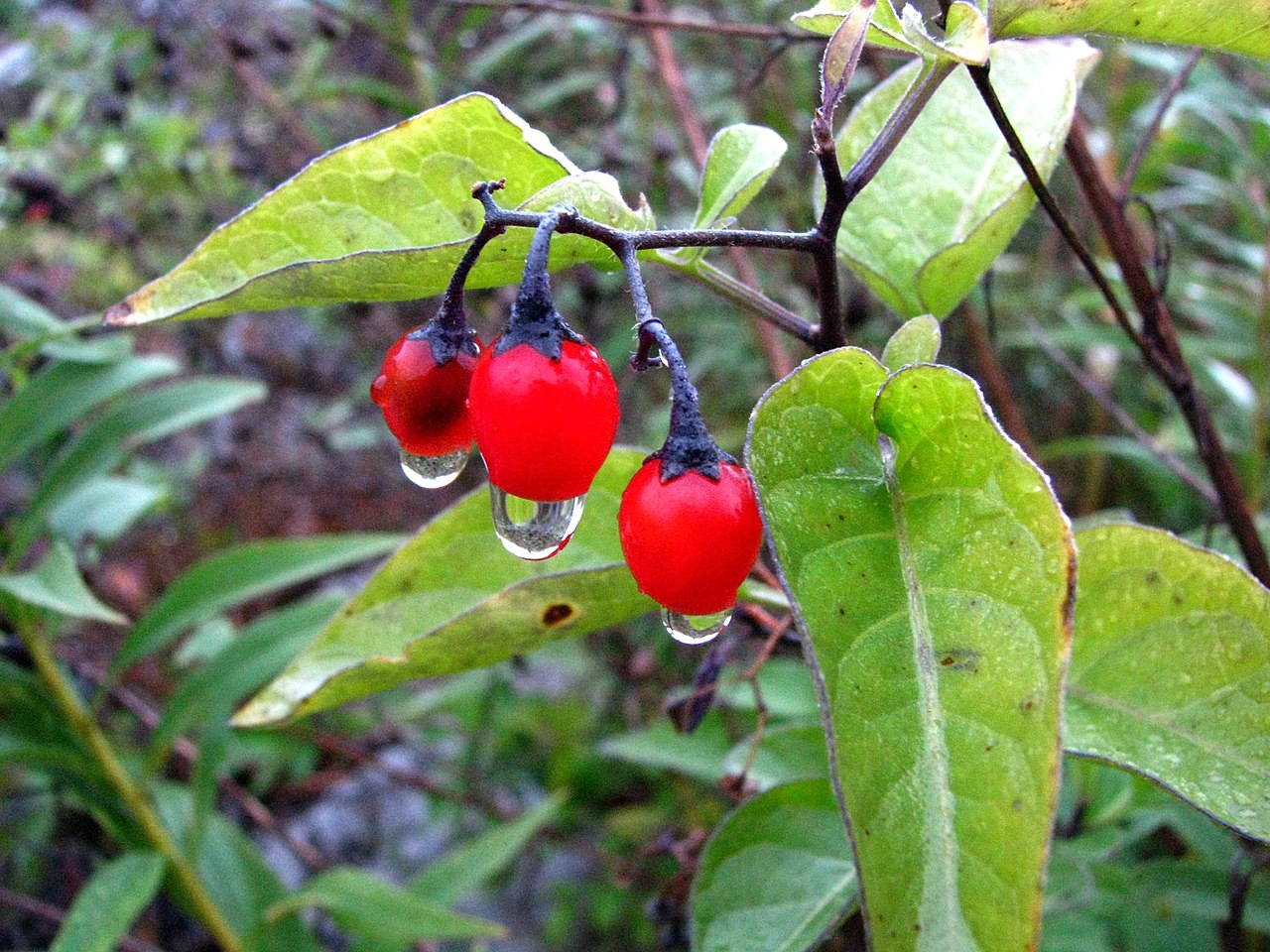
Bittersweet Nightshade is a perennial subshrub with stems that become woody at the base and can climb or scramble up to two meters in length. The plant produces distinctive purple flowers with bright yellow anthers that form a prominent central cone. These flowers develop into egg-shaped, shiny red berries which are toxic to humans. It typically inhabits nutrient-rich, moist to wet locations such as riverbanks, ditches, and alder carrs.
Details
Habitat function
Structural component in reed beds and willow thickets; provides hiding places for amphibians.
Nutrient uptake
High uptake of nitrate from the soil or riparian sediments.
Food source for
Birds (thrushes, warblers) eating the berries; caterpillars of various moth species.
Human use
Formerly used medicinally (Stipites Dulcamarae) for skin conditions; today mostly used as an ornamental plant due to toxicity.
Ecology
Ecological role
Provides cover for small animals in riparian zones; important host plant for specialized insect species.
Ecosystem service
Shoreline stabilization through root systems; food source for birds (endozoochory).
Threats
Currently not threatened; local threats include the drainage of wetlands.
Scientific profile
Profile
Reproduction
Generative via seeds (dispersal by birds, endozoochory) and vegetative through rooting of stem fragments and rhizome growth.
Protection & threats
Main threats
Currently not threatened; local threats include large-scale drainage of fens and carr forests.