Water Stick Insect
Ranatra linearis
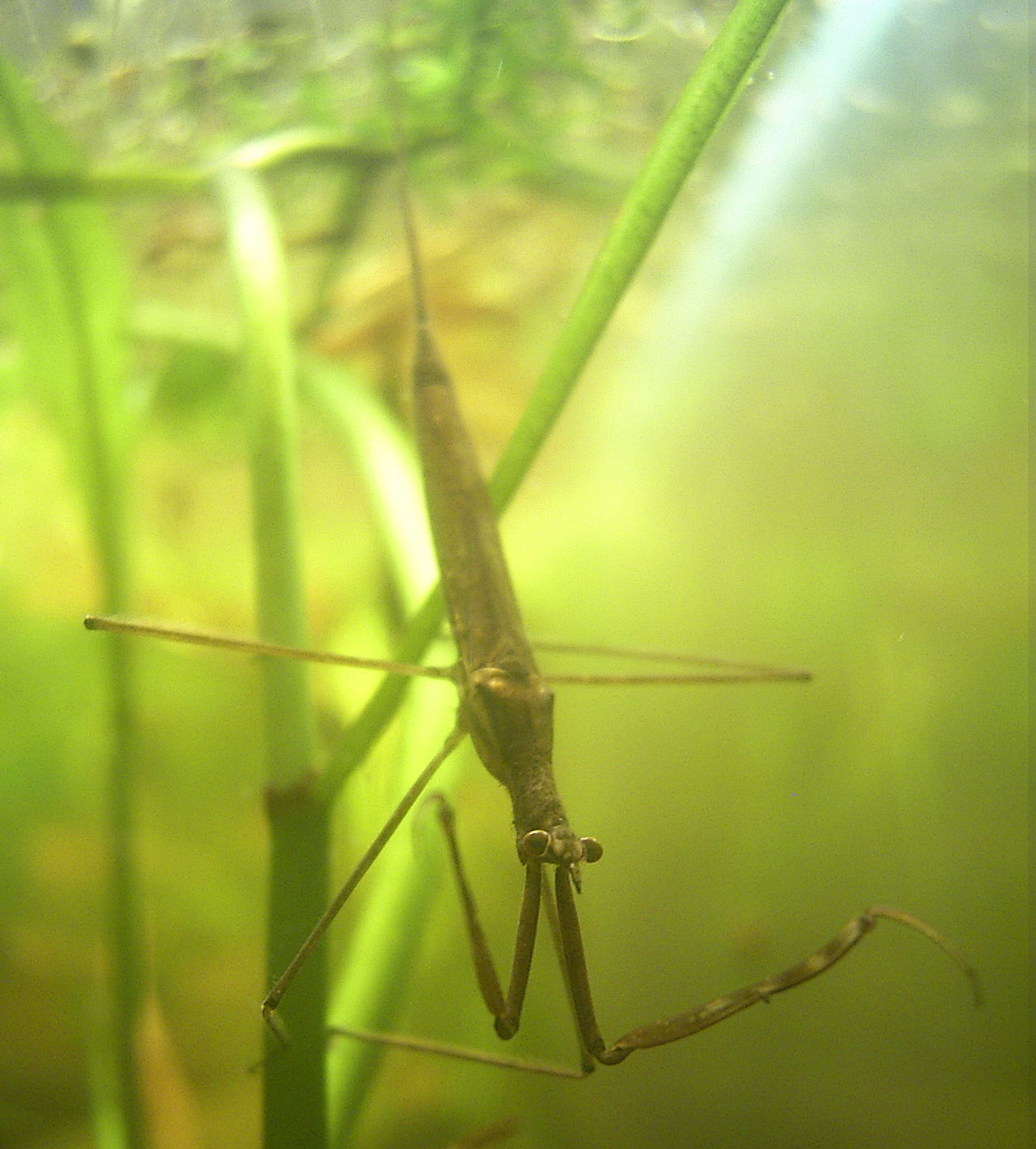
The water stick insect is a distinctive, stick-shaped aquatic bug belonging to the family Nepidae. It reaches a body length of up to 4 cm, supplemented by a respiratory tube of similar length at the end of the abdomen used for breathing. The species prefers stagnant or slow-moving waters with dense vegetation, where its morphology provides excellent camouflage for ambushing prey.
Details
Identification
Stick-like, extremely slender body; brown to yellowish coloration; long forelegs modified into raptorial legs; long respiratory tube at the end of the abdomen.
Social behavior
Solitary; spends most of its time motionless, lurking in the vegetation.
Diet
Predatory; feeds on various aquatic insects, their larvae, small tadpoles, and occasionally fish fry.
Hunting strategy
Ambush predator; prey is seized rapidly with the raptorial forelegs and subsequently sucked dry with the rostrum.
Spawning substrate
Aquatic plant stems, into which the eggs are inserted using the ovipositor.
Overwintering
Overwintering occurs as an adult within the water or in the bottom mud of the water body.
Ecology
Ecological role
Important predator in the littoral zone of stagnant waters, helping to regulate insect populations.
Natural predators
Larger fish, predatory aquatic insects (such as great diving beetles), and water birds.
Competitor species
Water scorpion, backswimmers, various dragonfly larvae.
Ecosystem service
Contributes to biodiversity and nutrient cycling in aquatic ecosystems.
Threats
Destruction of riparian vegetation, drainage of small water bodies, and pollution from insecticides.
Scientific profile
Profile
Distinguishing features
Stick-like, extremely elongated body (genus Ranatra). Characteristic is the long respiratory siphon at the end of the abdomen, which can almost reach body length (approx. 20-30 mm). The forelegs are modified into powerful raptorial legs. Unlike the Water Scorpion (Nepa cinerea), the body is cylindrical and not flat.
Role in food web
Predator in the macrophyte zone; regulates populations of insect larvae and small vertebrates.
Protection & threats
Main threats
Loss of small water bodies through filling or drying out, intensive water body maintenance (radical weed removal), pesticide input from agriculture, and eutrophication.
Population trend
Stable; in Northern Germany and partly spreading due to climate warming.
Conservation measures
Protection and creation of structurally rich small water bodies, preservation of reed beds and submerged vegetation, creation of buffer strips to reduce nutrient and pollutant inputs.