Common Hop
Humulus lupulus
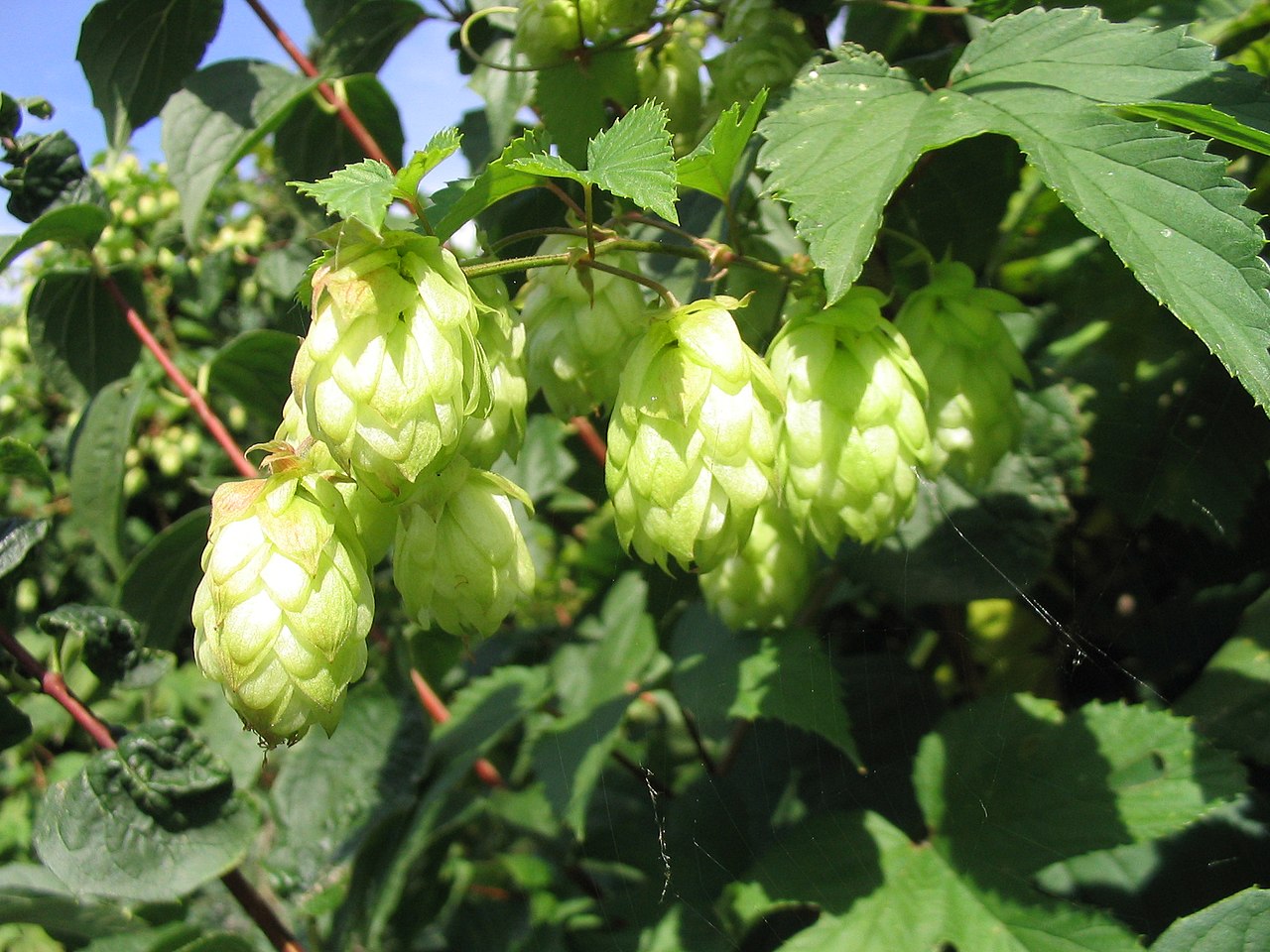
Common hop is a perennial, herbaceous climbing plant native to the Northern Hemisphere, typically found in nutrient-rich riparian forests. It is dioecious, with the female flowers (cones) being globally cultivated for their bittering agents and essential oils used in brewing. The plant utilizes hooked hairs on its stems to climb trees or supports, reaching heights of up to ten meters.
Details
Habitat function
Serves as a host plant for caterpillars (e.g., Comma, Peacock butterfly) and as a nesting site for small birds.
Nutrient uptake
High nitrogen uptake from the soil and near-surface groundwater.
Food source for
Caterpillars of the Peacock butterfly (Aglais io), the Comma (Polygonia c-album), and the Hop Snout moth.
Human use
Primarily as a bittering and flavoring agent in brewing; medicinally used as a sedative for sleep disorders.
Ecology
Ecological role
Important food plant for specialized insects; provides dense cover in riparian fringes.
Competitor species
Other lianas such as Old Man's Beard (Clematis vitalba).
Ecosystem service
Bank protection through root systems; habitat for pollinators and birds.
Threats
Loss of riparian forests; invasive species displacing native shoreline vegetation.
Scientific profile
Profile
Reproduction
Generative via wind pollination and seed dispersal (hydrochory/anemochory); vegetative very effective via rhizome runners.
Protection & threats
Main threats
Loss of natural riparian habitats due to river channelization, drainage, and intensive forestry conversion.