Gypsywort
Lycopus europaeus
Gypsywort is a perennial herbaceous plant in the mint family, typically reaching heights of up to 120 centimeters in wetland habitats. It features a characteristic square stem and opposite, coarsely toothed to pinnatifid leaves. Small white flowers appear from July to September, arranged in dense axillary whorls. The species spreads effectively through both seed dispersal and underground stolons.
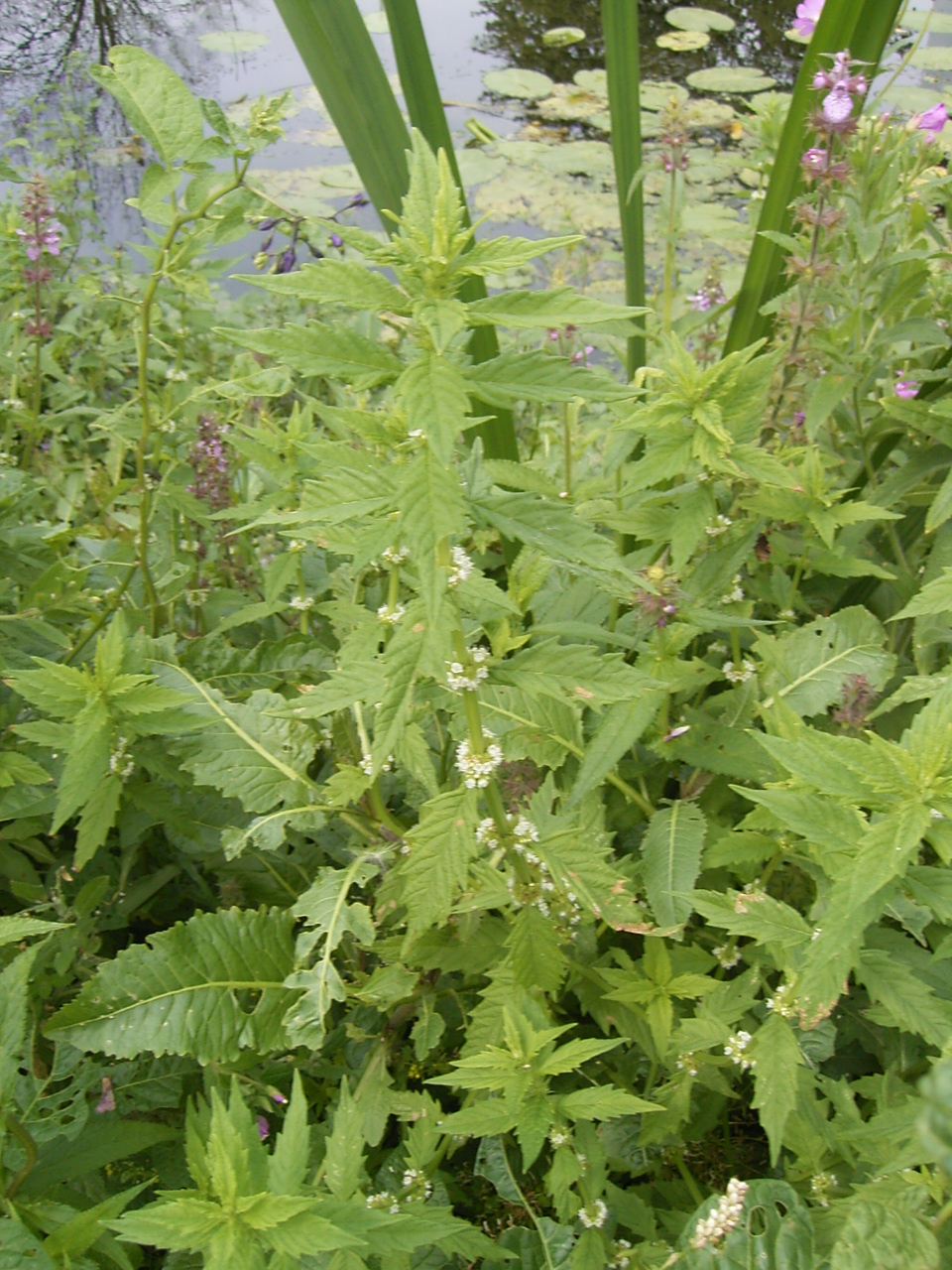
Details
Habitat function
Provides cover for amphibians and larval habitat for aquatic insects.
Nutrient uptake
High; effectively removes nitrogen compounds from soil and water.
Food source for
Bees, hoverflies, digger wasps, and butterflies.
Human use
Formerly used for dyeing textiles black; medicinal use for hyperthyroidism (thyrostatic agent).
Ecology
Ecological role
Important nectar source for insects and stabilizer of muddy riparian substrates.
Natural predators
Various specialized weevil species and leaf beetles.
Competitor species
Other tall herbs of the riparian zone such as Purple Loosestrife or Greater Pond-sedge.
Ecosystem service
Erosion control on banks through intensive root systems and filtering of nutrients from surface runoff.
Threats
Bank stabilization (hard engineering), drainage of wetlands, and intensive mowing of riparian strips.
Scientific profile
Profile
Reproduction
Generative via buoyant nutlets (hydrochory) and vegetative via stolon formation.
Protection & threats
Main threats
Drainage of wetlands, intensive bank engineering, and the destruction of natural river and lake shore dynamics.