Dryad's saddle
Cerioporus squamosus
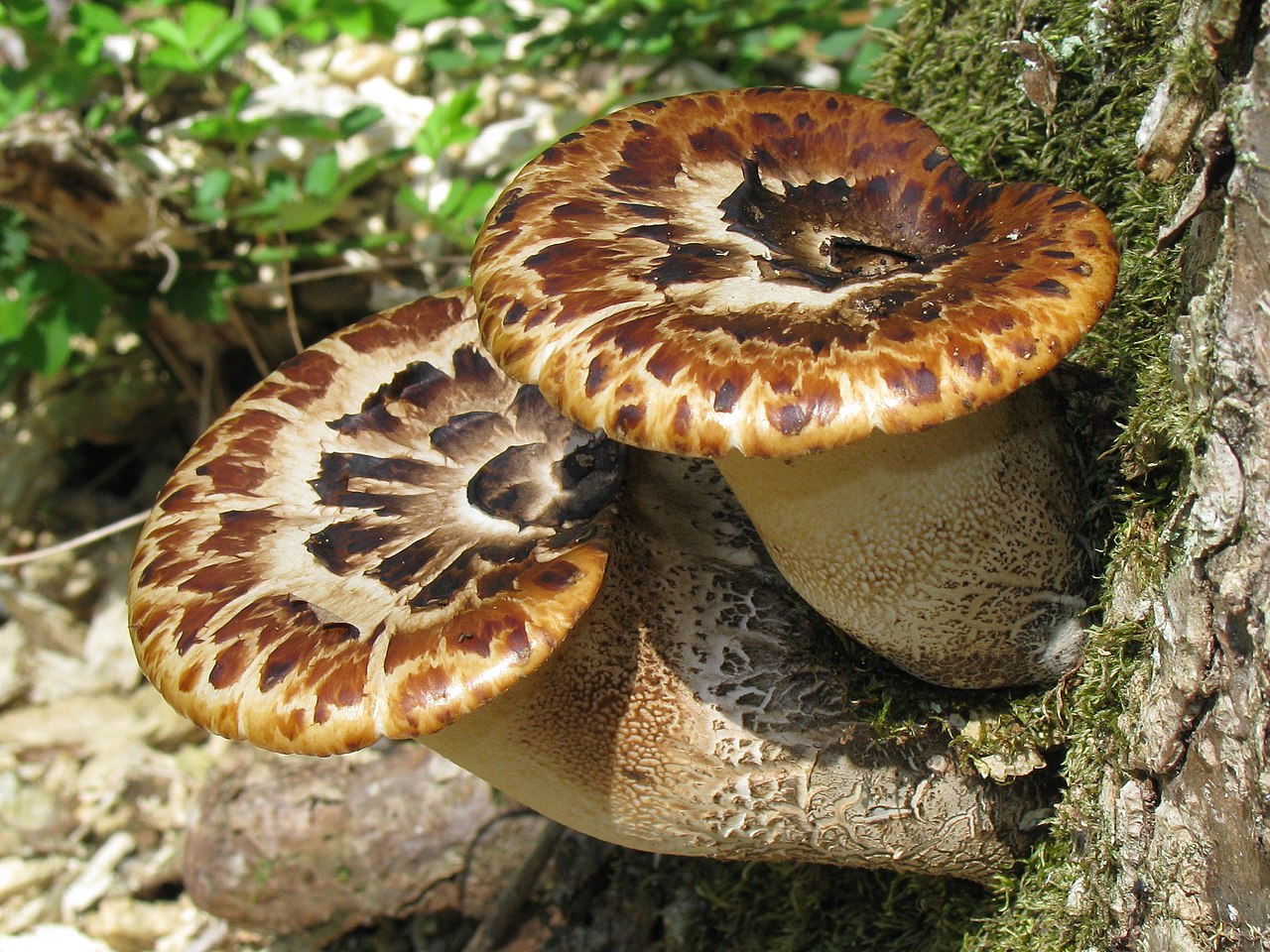
Dryad's saddle is a widespread polypore fungus that acts as both a parasite and a saprobe on various deciduous trees. It produces large, fan- or kidney-shaped fruiting bodies characterized by dark, concentric scales on a yellowish background. The fungus causes intensive white rot in the host wood and is primarily found during spring and early summer. It emits a distinctive odor often compared to cucumber or fresh flour.
Details
Identification
Cap with dark, appressed scales; large and angular pores on the underside; short, often eccentric stem with a black base; flour-like odor.
Diet
Feeds saprobically on dead wood or parasitically on living deciduous trees by decomposing lignin and cellulose.
Overwintering
Overwinters as mycelium within the host wood; fruiting bodies are usually annual and decay in winter.
Ecology
Ecological role
Important primary decomposer causing white rot, thereby creating habitats (cavities) for birds and insects in trees.
Natural predators
Various insect larvae (especially beetles of the family Erotylidae) and slugs.
Competitor species
Other wood-decaying fungi such as the Chicken of the Woods (Laetiporus sulphureus).
Ecosystem service
Nutrient cycling through wood decomposition; provision of microhabitats for saproxylophagous organisms.
Threats
Intensive forestry and the removal of old and dead wood in parks and forests.
Scientific profile
Profile
Distinguishing features
Large, scaly caps; conspicuously large, angular pores; black base of the usually lateral stipe; intense odor of fresh cucumbers or flour.
Habitat
Alluvial forests, parks, avenues, and mixed deciduous forests with a high proportion of old trees.
Reproduction
Sexual reproduction via basidiospores (10-16 x 4-6 µm, cylindrical-elliptical) released through the pores.
Protection & threats
Main threats
Intensive forestry and tree maintenance in parks leading to the removal of old trees and deadwood.
Conservation measures
Promotion of old-growth and deadwood concepts; preservation of habitat trees in commercial forests and urban green spaces.