Tawny Mining Bee
Andrena fulva
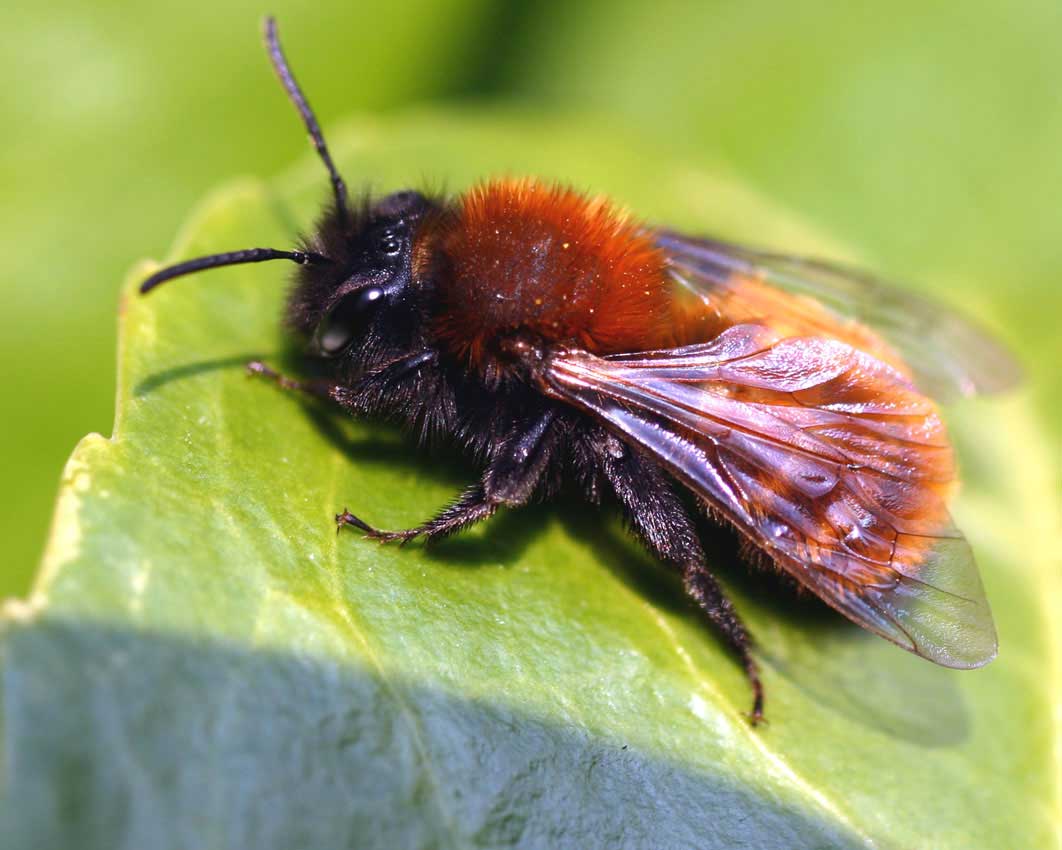
The Tawny Mining Bee is a solitary wild bee species, easily identified by the dense, fox-red fur of the females. It is one of the first bee species to emerge in the spring and is frequently found in gardens, parks, and along woodland edges. Females excavate deep nesting burrows in the ground, often creating characteristic small mounds of soil at the entrance. Being a polylectic species, it plays a vital role in the pollination of fruit trees and berry bushes during early spring.
Details
Identification
Females: Thorax and abdomen with fox-red fur, belly and legs black; Males: slimmer, brownish-grey fur with white facial hairs.
Social behavior
Solitary lifestyle, but frequently forms nesting aggregations (colonies) in suitable soil locations.
Diet
Polylectic; collects pollen from plants in at least 10 different families, including Rosaceae, Salicaceae, and Aceraceae.
Spawning substrate
Sandy, loamy, or loose soil, often in short-grass lawns or flower beds.
Overwintering
Overwinters as an imago (fully developed insect) within the underground brood cell.
Ecology
Ecological role
Important pollinator for early-blooming plants and crops such as currants and gooseberries.
Natural predators
Cuckoo bees (Nomada signata), predatory flies, birds, and various spider species.
Competitor species
Other early-flying mining bee species during nesting site selection.
Ecosystem service
Pollination of wild plants and fruit trees to ensure biodiversity and crop yields.
Threats
Loss of nesting opportunities due to soil sealing and intensive mowing of lawns.
Scientific profile
Profile
Distinguishing features
Females are almost unmistakable due to their dense red fur and black anal fringe. Males possess very long mandibles with a distinct tooth at the base. The species belongs to the subgenus Andrena s. str.
Habitat
Moderately anthropogenically influenced open landscapes, urban areas (gardens, parks), forest edges, and orchards.
Protection & threats
Main threats
Soil sealing, intensive lawn maintenance (frequent mowing, scarifying), use of pesticides in domestic gardens.
Population trend
Stable; the species is considered a synanthrope and is often frequently encountered in urban areas.
Conservation measures
Preservation of bare soil patches in gardens, promotion of native early-flowering plants (esp. willows), avoidance of insecticides, and acceptance of nesting aggregations in lawns.