Common Clubtail
Gomphus vulgatissimus
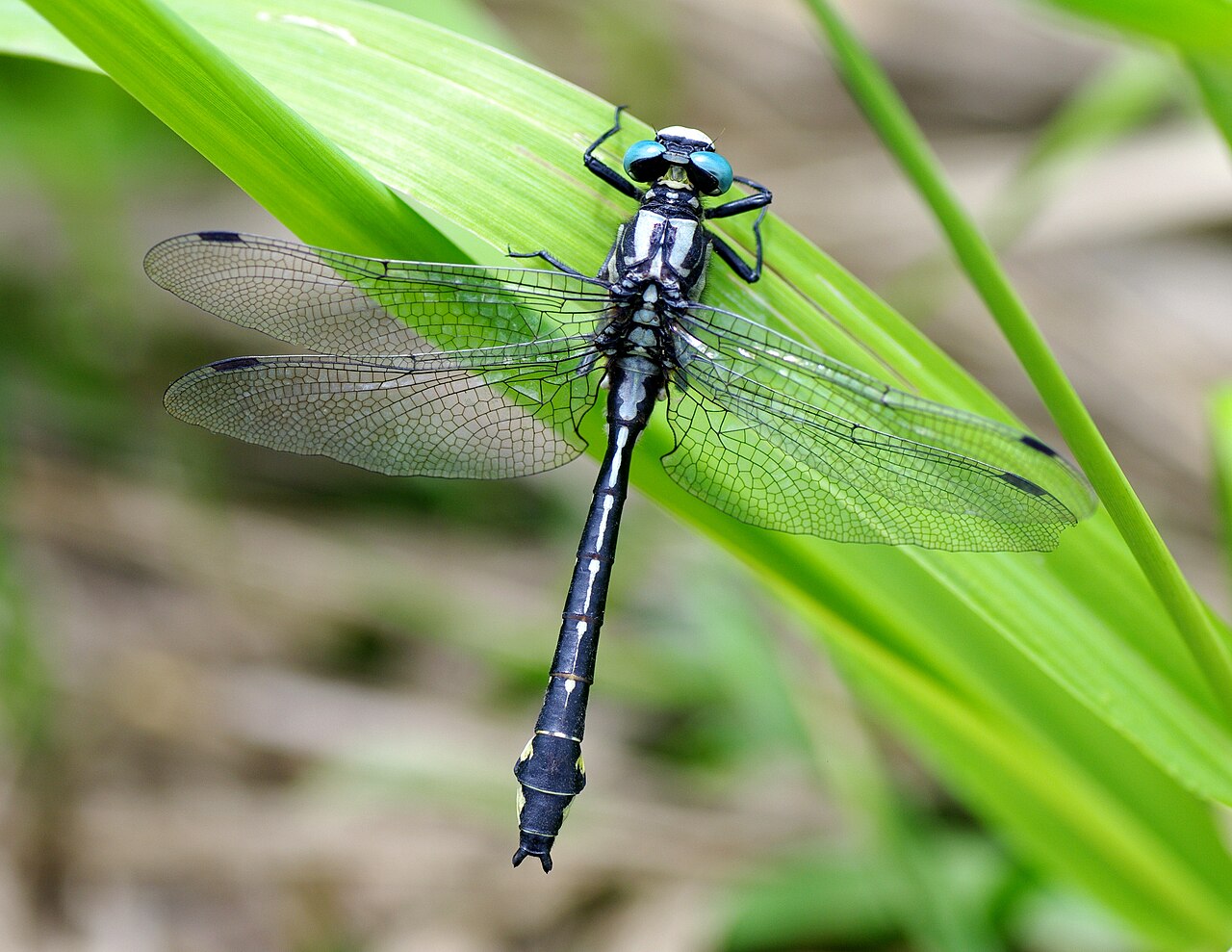
The Common Clubtail is a medium-sized dragonfly characterized by its club-shaped abdomen and distinct black and yellow pattern, which turns greenish-grey in older males. It is primarily found near flowing waters with sandy or silty substrates where the larvae develop buried in the sediment. Adults are often observed resting on the ground or low vegetation near riverbanks.
Details
Identification
Completely black legs, widely separated eyes, club-shaped abdominal tip, yellow and black thoracic stripes.
Social behavior
Solitary; males hold territories along riverbanks, while females often live away from water in forests or meadows.
Diet
Larvae feed on small aquatic invertebrates in the sediment; adults prey on various flying insects.
Hunting strategy
Larvae are ambush predators in the substrate; adults are perch hunters that catch prey in flight.
Spawning substrate
Eggs are dropped into open water during flight; larvae require sandy to silty substrates.
Overwintering
Overwintering occurs as a larva buried in the river sediment.
Ecology
Ecological role
Important predator in both aquatic (larva) and terrestrial (adult) ecosystems.
Natural predators
Birds (e.g., Eurasian hobby), larger dragonflies, fish (for larvae).
Competitor species
Other Gomphid species such as the Western Clubtail (Gomphus pulchellus).
Ecosystem service
Regulation of insect populations.
Threats
River engineering, excessive siltation due to agriculture, water pollution.
Scientific profile
Profile
Distinguishing features
Widely separated eyes (Gomphidae characteristic). Abdominal tip in males significantly club-shaped (segments 7-9). Legs are completely black without yellow lines. The lower anal appendages of the males are deeply bifid.
Role in food web
Important predator in the benthic food web of running waters as well as an adult in the terrestrial environment.
Protection & threats
Main threats
River engineering, bank stabilization (loss of shallow water zones), excessive wave action from shipping, pesticide inputs, and eutrophication.
Population trend
After severe declines in the 20th century, the species is currently showing a significant recovery and recolonization of former areas in Central Europe due to improved water quality.
Conservation measures
Revitalization of rivers, removal of bank reinforcements, creation of riparian buffer strips to reduce nutrient/pollutant input, preservation of natural sedimentation processes.