Meadow Grasshopper
Pseudochorthippus parallelus
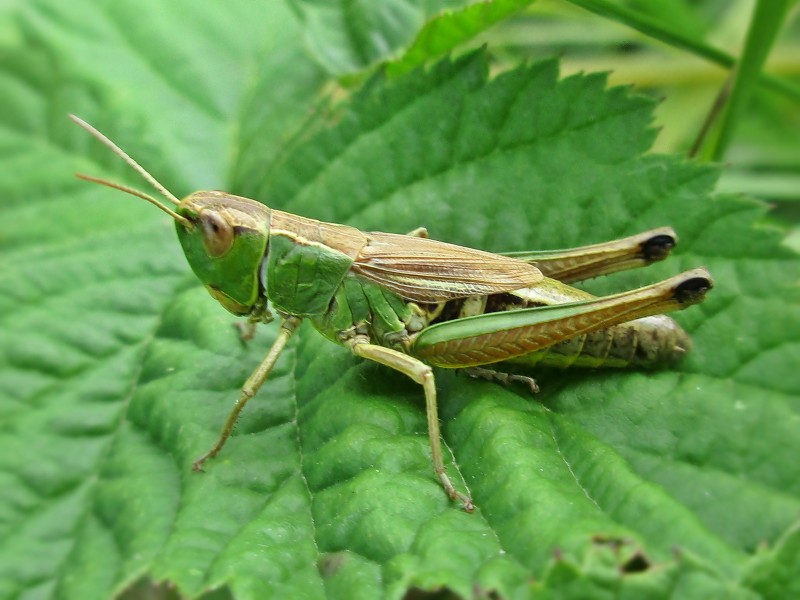
The Meadow Grasshopper is one of the most common grasshopper species in Central Europe, inhabiting almost all types of open grassland. The species is characterized by distinct sexual dimorphism, with females being significantly larger and usually having shortened wings. It is an important component of the meadow ecosystem and serves as food for many animals.
Details
Identification
Almost straight pronotal side keels; females with short wings; males with wings reaching nearly to the end of the abdomen.
Social behavior
Males occupy singing perches and exhibit complex acoustic behavior (courtship and rival songs).
Diet
Herbivorous; feeds on various grasses, especially true grasses (Poaceae).
Spawning substrate
Eggs are laid in loose soil or at the base of grass stems.
Overwintering
Overwintering occurs exclusively in the egg stage within the soil.
Ecology
Ecological role
Primary consumer; converts plant biomass and is an essential food source for higher trophic levels.
Natural predators
Birds, spiders, robber flies, ground beetles, amphibians.
Competitor species
Other grasshopper species such as Chorthippus biguttulus or Omocestus viridulus.
Ecosystem service
Contribution to nutrient cycling; important prey for threatened bird species.
Threats
Intensive agriculture (frequent mowing), pesticide use, habitat fragmentation.
Scientific profile
Profile
Distinguishing features
Pronotal side keels almost parallel (only slightly curved inwards); wings shortened in males (ending before the tip of the abdomen), very short and scale-like in females; hind knees usually dark colored.
Habitat
Eurytopic; inhabits a wide range of moderately dry to moist open land habitats, including hay meadows, pastures, forest clearings, bogs, and roadsides.