Starry Gentian
Gentiana cruciata
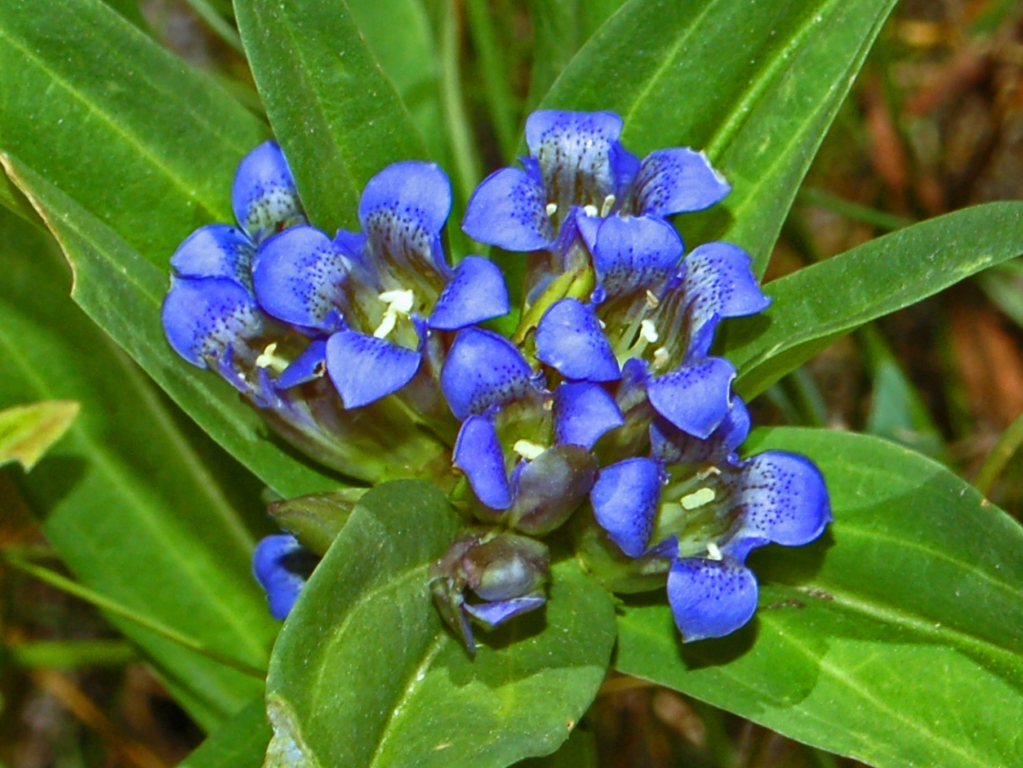
The Starry Gentian is a perennial herbaceous plant characteristic of calcareous grasslands and open woodlands. It reaches heights of 10 to 40 cm and is distinguished by its leathery leaves arranged in opposite pairs forming a cross. The bell-shaped flowers are deep blue on the inside and typically greenish-blue on the outside.
Details
Habitat function
Primary habitat and food source for specialized butterfly larvae.
Nutrient uptake
Low nutrient requirement, adapted to oligotrophic sites.
Food source for
Alcon Blue butterfly (Phengaris rebeli), bumblebees (Bombus spp.), bees.
Human use
Formerly used as a medicinal plant (bitter tonic for digestive issues); today only occasionally used as an ornamental plant in rock gardens.
Ecology
Ecological role
Important host plant for specialized insects; the sole oviposition plant for the rare Alcon Blue butterfly (Phengaris rebeli).
Natural predators
Slugs and snails, occasionally livestock (though usually avoided due to bitter compounds).
Competitor species
Displacement by tall grasses and shrubs if dry grasslands are not managed or grazed.
Ecosystem service
Support of biodiversity through specialized pollinator interactions.
Threats
Eutrophication (nutrient input), shrub encroachment, abandonment of traditional sheep grazing, conversion of grassland to arable land.
Scientific profile
Profile
Reproduction
Exclusively generative reproduction via seeds; the species forms a long-lived seed bank in the soil.
Protection & threats
Main threats
Habitat loss due to abandonment of land use and subsequent scrub encroachment (succession), agricultural intensification, eutrophication, and isolation of small populations.