Shield ciliate
Aspidisca
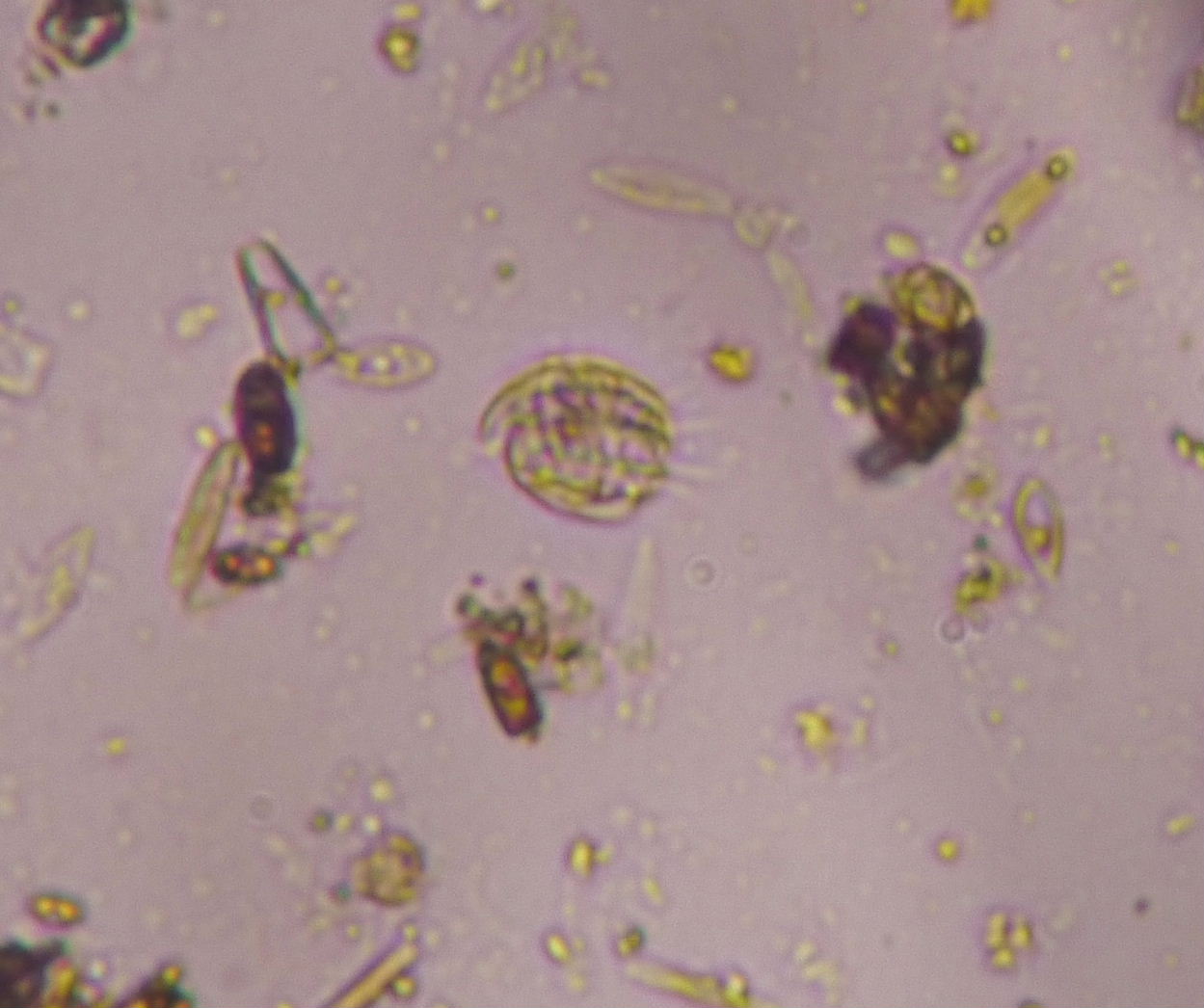
Shield ciliates of the genus Aspidisca are small, unicellular organisms characterized by a rigid pellicle and a distinct shield-like shape. They typically move in a jerky fashion across surfaces using specialized bundles of cilia known as cirri. These organisms play a vital role in the microbial loop of aquatic ecosystems and are frequently found in the activated sludge of wastewater treatment plants.
Details
Identification
Oval to round body, usually with dorsal ribs; ventral cirri arranged in groups; lack of a prominent peristome at the anterior end.
Social behavior
Solitary, but occurs in high population densities when food is abundant.
Diet
Primarily feeds on bacteria and fine detritus grazed from the substrate.
Hunting strategy
Grazing of biofilms on surfaces.
Overwintering
Formation of cysts under unfavorable environmental conditions.
Ecology
Ecological role
Important consumer of bacteria; contributes to the reduction of bacterial load and nutrient remobilization.
Natural predators
Larger ciliates, rotifers, small crustaceans, and predatory amoebae.
Competitor species
Other grazing ciliates such as Euplotes.
Ecosystem service
Purification of water through bacterial consumption; indicator of water quality.
Threats
Toxic chemicals in wastewater, extreme oxygen depletion.
Scientific profile
Profile
Habitat
Freshwater, brackish, and marine habitats; particularly common in activated sludge plants (wastewater treatment) and biofilms.
Reproduction
Asexual reproduction by binary transverse fission; sexual processes via conjugation for genetic exchange.
Ecological role
Important bacterial consumer; regulates bacterial biomass and promotes water clarity by reducing suspended particles.