Nitrobacteria
Nitrobacter
Nitrobacter is a genus of Gram-negative, chemoautotrophic bacteria that play a central role in the global nitrogen cycle. They specialize in the oxidation of nitrite to nitrate, deriving energy for their growth in the process. These microorganisms are widely distributed in soils, oceans, and freshwater systems. In wastewater treatment and aquaristics, they are essential for the degradation of toxic nitrogen compounds.
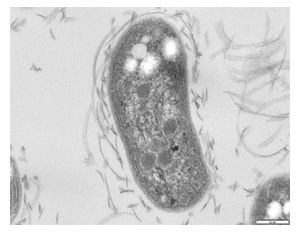
Details
Identification
Gram-negative, short rods, often pear-shaped; possess internal membrane systems (polar caps) for nitrite oxidation.
Social behavior
Formation of biofilms; often associated with ammonia oxidizers such as Nitrosomonas in synergistic communities.
Diet
Chemolithoautotrophic: uses nitrite (NO2-) as an energy source and carbon dioxide (CO2) as the sole carbon source.
Overwintering
Survival in dormant states or through significantly slowed metabolism at low temperatures.
Ecology
Ecological role
Second stage of nitrification: conversion of toxic nitrite into nitrate, which serves as a nutrient for plants.
Natural predators
Bacteriophages, protozoa (e.g., amoebae and flagellates).
Competitor species
Other nitrite oxidizers such as Nitrospira or Nitrotoga, which often dominate at lower nitrite concentrations.
Ecosystem service
Wastewater treatment, detoxification of water bodies, maintenance of soil fertility through nitrate formation.
Threats
Pesticides, heavy metals, extreme pH fluctuations, oxygen deficiency, and high concentrations of free ammonia.
Scientific profile
Profile
Habitat
Globally distributed in aerobic zones of soils, freshwater, marine environments, and technical systems like wastewater treatment plants and biofilters. Prefers interfaces with high nitrite availability.
Ecological role
Key organism in the global nitrogen cycle (second step of nitrification). Prevents the accumulation of toxic nitrite and converts it into nitrate, which serves as the primary nitrogen source for primary producers.