Yellow Water-lily
Nuphar lutea
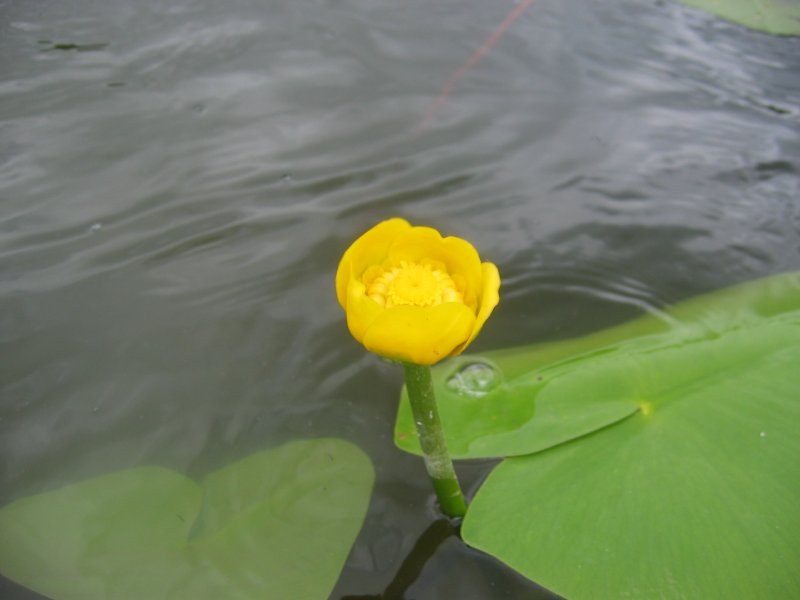
The Yellow Water-lily is a perennial aquatic plant with a robust rhizome, primarily found in stagnant or slow-moving, nutrient-rich waters. It develops large, heart-shaped floating leaves as well as more delicate, submerged leaves. The bright yellow, spherical flowers rise above the water surface and are mainly pollinated by flies and beetles. It is ecologically valuable as an oxygen provider and a habitat for numerous aquatic organisms.
Details
Oxygen production
Releases oxygen both through the roots into the sediment and through the leaves into the water.
Habitat function
Important habitat for invertebrates (e.g., caddisfly larvae) and spawning ground for fish.
Nutrient uptake
High capacity for absorbing phosphates and nitrates from the sediment.
Food source for
Muskrats, waterfowl, various insect species (e.g., water lily leaf beetle).
Human use
Used as an ornamental plant in garden ponds and parks; historically used as a medicinal plant and emergency food source.
Ecology
Ecological role
Primary producer; provides hiding places for juvenile fish; serves as a perch for dragonflies; shades the water and reduces algae growth.
Natural predators
Muskrats and beavers eat the rhizomes; waterfowl eat the seeds; leaf beetle larvae feed on the leaves.
Competitor species
White Water-lily (Nymphaea alba), Fennel Pondweed (Potamogeton pectinatus).
Ecosystem service
Nutrient sequestration; reduction of sediment erosion; increase of structural diversity in the water body; aesthetic value for humans.
Threats
Eutrophication, river engineering, boat wash, dredging activities.
Scientific profile
Profile
Reproduction
Generative via seeds dispersed by water (hydrochory) or waterfowl. Vegetative via the creeping rhizome (up to 10 cm thick), which branches and forms new colonies through fragmentation.
Protection & threats
Main threats
Severe eutrophication (algal mats), mechanical destruction by boat traffic, river engineering, and dredging activities.