Soft rush
Juncus effusus
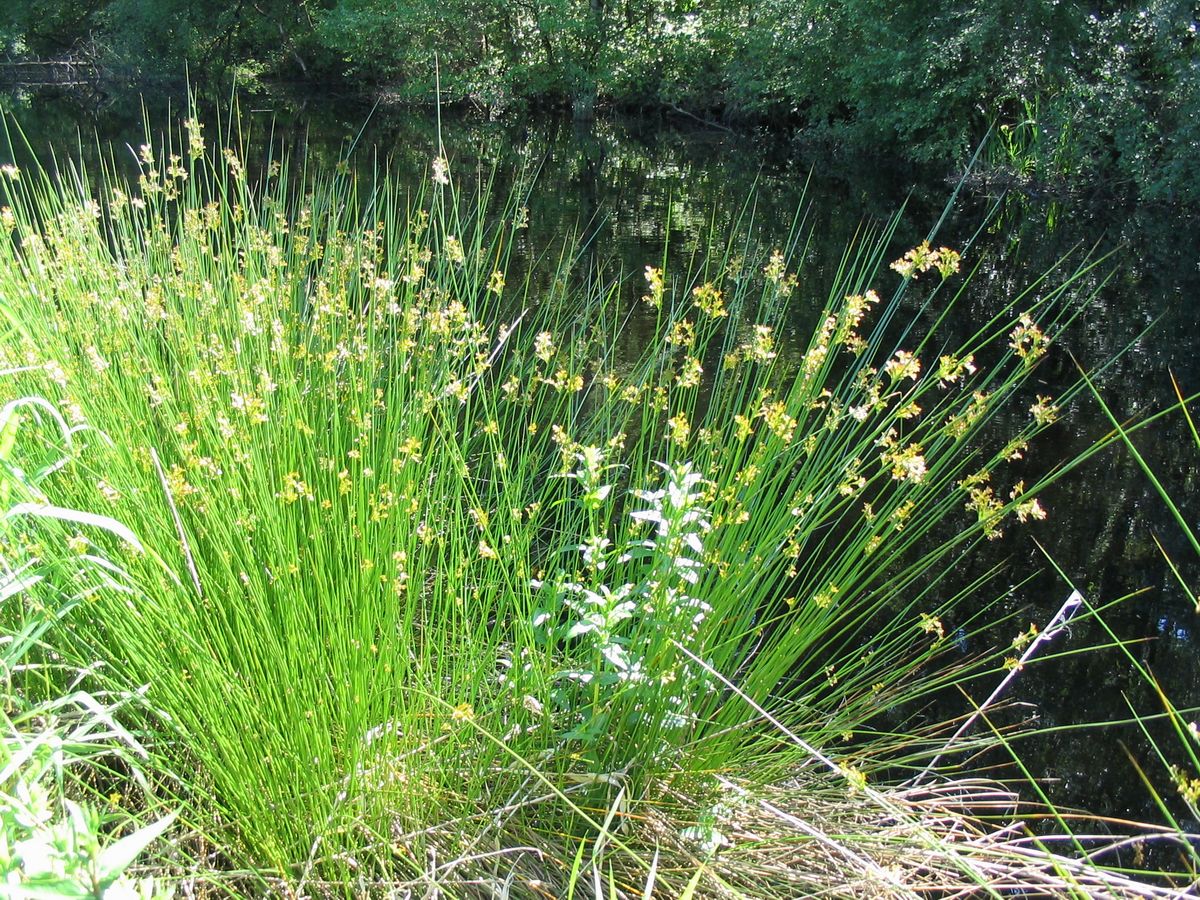
The soft rush is a perennial, densely tufted herbaceous plant reaching heights of 30 to 120 centimeters. Its rigid, smooth, and glossy green stems are filled with continuous pith and lack functional leaf blades. The inflorescence is a loose, often 'fluttering' cyme that appears to be lateral because the lowest bract continues the stem vertically upward.
Details
Oxygen production
Oxygen transport via aerenchyma into the rhizosphere (radial oxygen loss).
Habitat function
Provides hiding places for waterfowl and small mammals; spawning ground for amphibians.
Nutrient uptake
High capacity for eliminating nitrogen and phosphorus from the water.
Food source for
Seeds for birds; stems as food for specialized insect larvae.
Human use
Used in constructed wetlands; historically used for basketry and wicks (rushlights).
Ecology
Ecological role
Pioneer colonizer of wet habitats; contributes to soil stabilization and primary production in wetlands.
Natural predators
Muskrats, occasionally grazing livestock (though not very palatable).
Competitor species
Other large sedges (Carex spp.) and rush species.
Ecosystem service
Water purification through nutrient uptake; erosion control on banks; habitat formation.
Threats
Drainage of wet grasslands; intensive grazing with trampling damage; total drainage.
Scientific profile
Profile
Reproduction
Generative via tiny, light-germinating seeds (high seed production) dispersed by water or animals (attachment). Vegetative via short, creeping rhizomes leading to the formation of dense clumps.
Protection & threats
Main threats
Drainage of wetlands, intensive agricultural use (over-fertilization/plowing), and the structural modification of natural shorelines.