Round Goby
Neogobius melanostomus
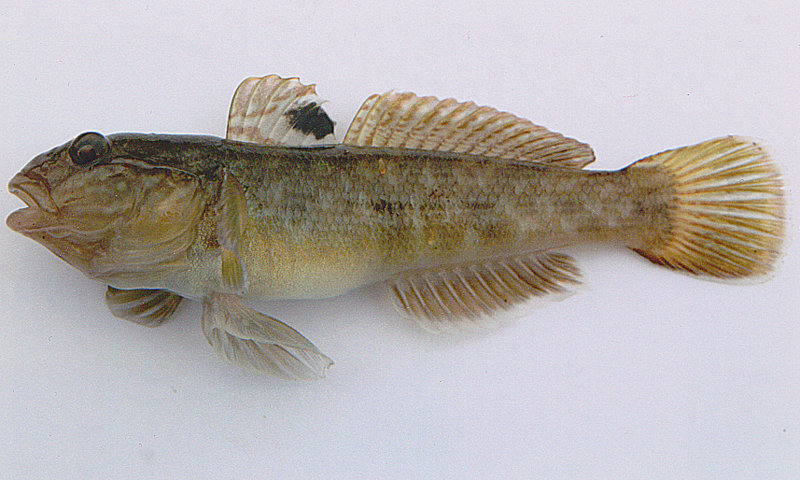
The Round Goby is a euryhaline bottom-dwelling fish native to the Ponto-Caspian region. It is characterized by a prominent black spot on the posterior end of its first dorsal fin and pelvic fins fused into a suction disk. In recent decades, it has rapidly spread as an invasive species throughout European river systems and the North American Great Lakes, where it displaces native species.
Profile
10cm
25cm
0.05kg
4yr
0m
30m
0°C
30°C
Details
Identification
Distinctive black spot on the first dorsal fin, pelvic fins fused into a suction disk, robust head with large, prominent eyes.
Social behavior
Highly territorial and aggressive, especially males while guarding nest sites; they actively displace other benthic fish species.
Diet
Opportunistic carnivore: Feeds on mollusks (especially zebra mussels), crustaceans, insect larvae, fish eggs, and small fish.
Hunting strategy
Ambush predator and active searcher of the lake or river bed; uses its suction disk to anchor itself to substrates in currents.
Spawning substrate
Cavities under stones, rock crevices, mussel shells, or anthropogenic structures such as drainage pipes.
Overwintering
Retreat to deeper, more temperature-stable water layers with reduced metabolic activity.
Ecology
Ecological role
Drastically alters benthic communities; serves as significant prey for predatory fish but competes strongly with native bottom-dwelling fish.
Natural predators
Zander, European perch, Northern pike, Eel, cormorants, grey herons, and various gull species.
Competitor species
European bullhead (Cottus gobio), stone loach, European flounder, ruffe.
Ecosystem service
Locally contributes to the reduction of invasive mussel populations; serves as a biomass source for higher trophic levels.
Threats
No significant threats; the species benefits from anthropogenic water body alterations and commercial shipping.