Shiny Ramshorn Snail
Segmentina nitida
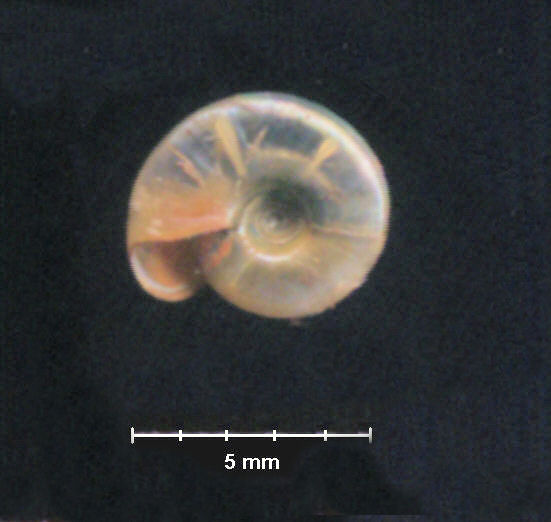
The Shiny Ramshorn Snail is a small freshwater gastropod with a discoidal, reddish-brown shell. It is characterized by its high gloss and internal lamellae that are visible through the translucent shell walls. This species prefers densely vegetated habitats such as ditches, ponds, and marshes with high water quality and relatively stable environmental conditions.
Details
Identification
Disk-shaped shell, 4–7 mm in diameter, highly glossy, reddish-brown to horn-colored; 3–6 internal transverse lamellae (teeth) visible in the final whorl.
Social behavior
Solitary, but can occur in high densities when food is abundant.
Diet
Feeds primarily on periphyton (biofilm), fine detritus, and soft plant tissues.
Spawning substrate
Undersides of aquatic plant leaves (e.g., water lilies, rushes).
Overwintering
Overwinters in the sediment or on decaying plant matter in frost-free depths.
Ecology
Ecological role
Important decomposer in aquatic systems; converts organic matter and serves as prey for higher trophic levels.
Natural predators
Fish, waterfowl, predatory insect larvae (dragonflies, diving beetles).
Competitor species
Other small ramshorn snails such as Anisus vortex or Gyraulus albus.
Ecosystem service
Support of the nutrient cycle through detritus decomposition and algae control.
Threats
Habitat loss due to wetland drainage, eutrophication from fertilizer runoff, and intensive ditch clearing.
Scientific profile
Profile
Distinguishing features
Characteristic internal lamellae (septa), usually arranged in groups of three, visible through the shell like spokes on a wheel. The shell has a sharp keel at the periphery. The aperture is heart-shaped and narrowed by the lamellae.
Diet
Algae (periphyton), detritus, and decaying plant material (e.g., Lemna trisulca).
Reproduction
Hermaphrodite; eggs are laid in small, gelatinous capsules on the underside of aquatic plants. Both outcrossing and self-fertilization (selfing) are possible.
Role in food web
Primary consumer; converts plant biomass and detritus into animal biomass and serves as prey for higher trophic levels.
Protection & threats
Main threats
Eutrophication from agricultural fertilizers, intensive mechanical ditch clearing, drainage of wetlands, and lowering of water tables.
Conservation measures
Extensive ditch management (sectional clearing on a multi-year rotation), maintenance of high water levels in marshes, protection of sedge fens and macrophyte stands.