Stigeoclonium
Stigeoclonium
Stigeoclonium is a genus of filamentous green algae within the family Chaetophoraceae. It is characterized by heterotrichous growth, consisting of a prostrate basal system and erect, branched filaments that often terminate in fine hairs. These algae primarily colonize stones and aquatic plants in both lotic and lentic freshwater habitats and are known for their adaptability to varying nutrient conditions.
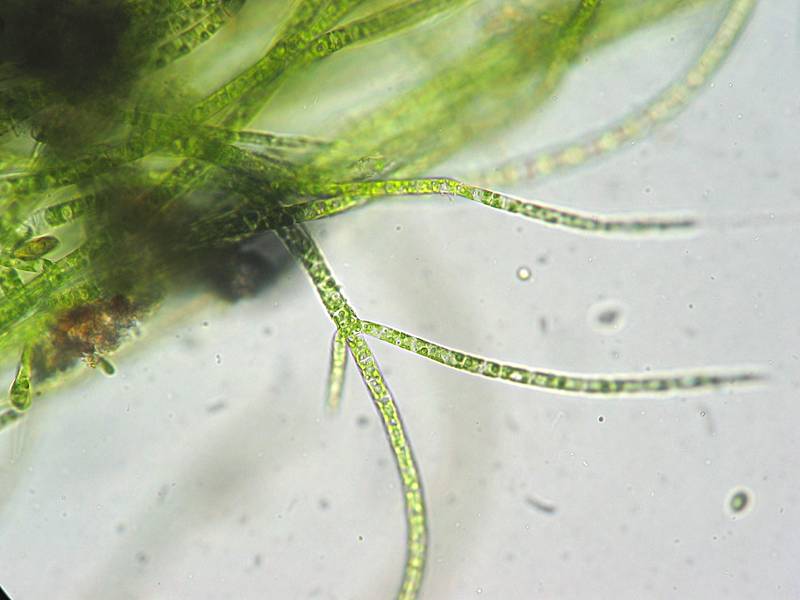
Details
Oxygen production
High during the light phase due to intensive photosynthesis.
Habitat function
Provides shelter and grazing grounds for small aquatic invertebrates.
Nutrient uptake
Very efficient uptake of nitrates and phosphates; capable of accumulating heavy metals.
Food source for
Gastropoda (snails), Ephemeroptera larvae (mayflies), Chironomidae (midge larvae).
Human use
Studied in research for biomonitoring analysis and in wastewater treatment systems (phycoremediation).
Ecology
Ecological role
Primary producer; serves as an oxygen provider and the base of the food web in benthic habitats.
Natural predators
Herbivorous macroinvertebrates (e.g., mayfly larvae), snails, and small fish.
Competitor species
Other filamentous green algae such as Cladophora or Oedogonium.
Ecosystem service
Oxygen production, nutrient fixation, and provision of microhabitats for periphyton organisms.
Threats
Extreme herbicide contamination or massive mechanical disturbance of water bodies.
Scientific profile
Protection & threats
Main threats
Not threatened; the genus benefits from anthropogenic influences such as nutrient inputs and river engineering.