Long-spined water flea
Daphnia longispina
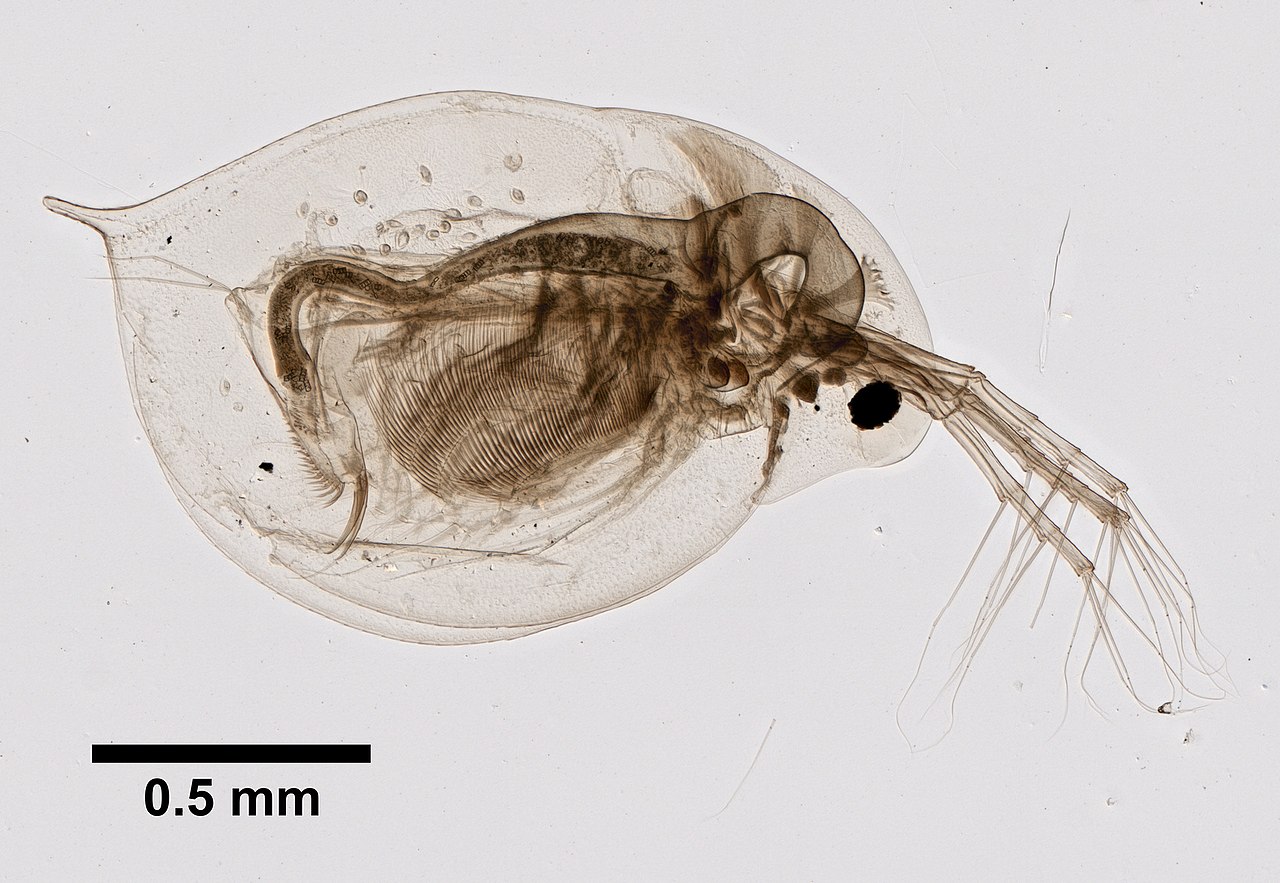
Daphnia longispina is a small, nearly transparent water flea primarily found in the pelagic zones of standing water bodies. It is characterized by a prominent long shell spine (spina) at the posterior end, which likely aids in stabilization and defense against predators. This species is a key primary consumer that filters algae and bacteria from the water, while serving as an essential food source for fish.
Details
Identification
Long posterior shell spine (spina), large head with pointed rostrum, very large compound eye, transparent carapace.
Social behavior
Often forms dense aggregations (swarms) in open water.
Diet
Filter feeder consuming unicellular algae, bacteria, and organic detritus.
Hunting strategy
Creates a water current with its hairy legs to sieve particles from the water column.
Spawning substrate
Brood chamber located under the carapace; resting eggs are released onto the sediment.
Overwintering
Usually overwinters as resting eggs (ephippia) in the sediment, though it can remain active in deep lakes throughout the winter.
Ecology
Ecological role
Critical link between phytoplankton and higher consumers like fish; contributes to water purification.
Natural predators
Planktivorous fish (e.g., bleak), dragonfly larvae, backswimmers, predatory zooplankton such as Leptodora kindtii.
Competitor species
Other Daphnia species (e.g., Daphnia pulex, Daphnia magna) and copepods (Cyclops).
Ecosystem service
Regulation of algal growth (top-down control), increasing water clarity and quality.
Threats
Eutrophication, pesticide pollution, climate change, and invasive species such as the predatory water flea Cercopagis pengoi.
Scientific profile
Profile
Distinguishing features
Long apical spine; head without a keel; ocellus typically absent; post-abdomen with 9-14 anal teeth; terminal claws without a basal pecten; member of the Daphnia longispina species complex.
Reproduction
Cyclical parthenogenesis; asexual reproduction under favorable conditions; environmental stress (food scarcity, photoperiod) triggers production of males and haploid eggs for sexual reproduction.